
The New World Order

One Possibility!
In regards to the current economic situation, because of last year's global recession and also the recent economic slowdown a catastrophic global economic crisis has occurred.
After the stock market crashed, all of the financial markets were closed for two weeks. Many were in a state of shock!
Hyperinflation, already a concern in Latin America had begun to affect other economies as well. Because of these concerns regarding hyperinflation and the stock market crash there was total chaos, globally! Everyone panicked so much that there was a run on the banks so all of the banks were forced to close. Some have since reopened. The media and the press had 24/7 coverage of all of this on every tv channel.
Some businesses were forced by the government to temporarily close their doors during which time government employees examined business records to any companies/corporations they wanted. Also, the internet and all social media sites were shut down so they could start a new internet service with only government sanctioned streaming news programs. The reason they said was that it was a necessary evil and we had to accept it.

Now they're telling us on the daily news reports that some sort of global restructuring is going on behind the scenes involving all of the world's financial markets, economic blocks, and that everything will be okay. The other day we heard they would be implementing a new global cashless system any day now and when this happens we will no longer be able to use cash. Biometric and rfid systems/alternatives are being installed everywhere. Our hands, fingers and retinas were scanned and recorded for this new biometric system.
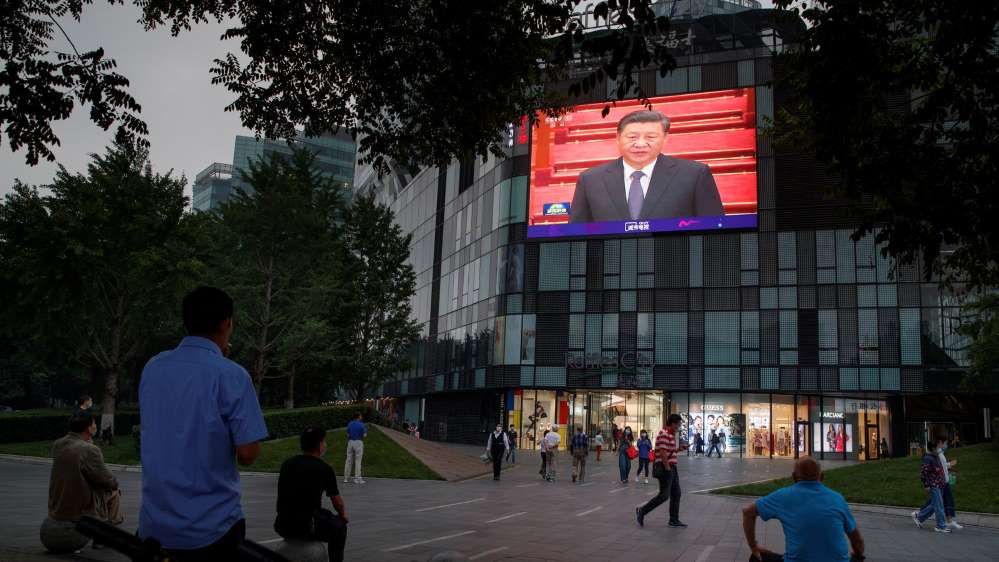
Our newly appointed global leader made his first appearance and he somewhat explained our economic situation. Everyone's shocked that all of this has so suddenly come to pass after the recent stock market collapse. It's difficult to believe this is really happening. It's crazy. Everything that the global president says now becomes the law. NWO banners and slogans are showing up everywhere, throughout every neighborhood, street, and city. Massive tv displays are being installed throughout every region and major city. These are easily visible and are currently displaying the daily news reports.

We all agree martial law has become a reality. U.N. troops, the military police, and the local police have been stationed throughout every city. I never imagined anything like this could happen! Biometric and rfid identification systems are an everyday part of life. Everything's gone digital overnight. Those who have resisted this new system and are trying to live off the grid are already facing serious problems going about their daily lives.
Just recently there were new policies established for the masses regarding those who haven't gone in and received their biometric identification stating that it's now considered mandatory!
A friend of mine and his family had decided not to be included in the biometric program were on their way to live underground at one of their relatives properties. They were then stopped at one of the many local law enforcement checkpoints. Afterward he and his wife and kids have turned up missing and they haven't been seen or heard from since.
I really hope they haven't been sent to an internment camp!
Living in a global fascist state!
Read more »
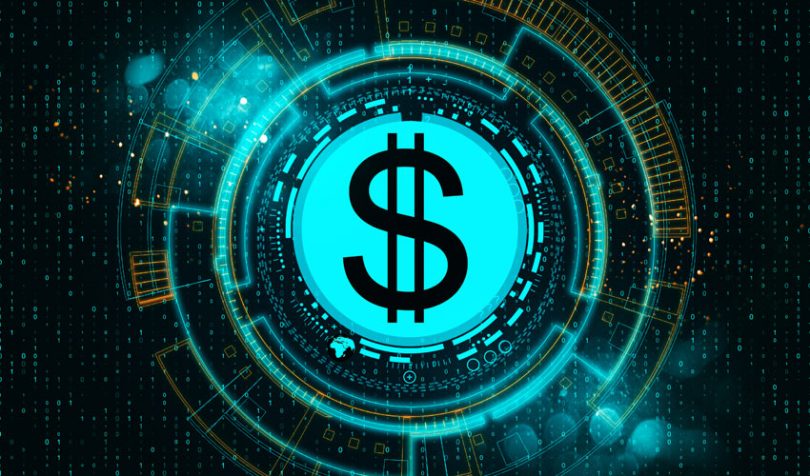
Let me start by thanking the Atlantic Council for providing a fitting venue to discuss central banks’ forays into Digital Currencies.
Since its founding in 1961, the Council has made important contributions to strategic, political, and economic policy debates. Those debates have served us well, helping us to test the boundaries of our thinking and be better prepared for what lies ahead.
So, today, we aim to test our thinking again. We have moved beyond conceptual discussions of CBDCs and we are now in the phase of experimentation. Central banks are rolling up their sleeves and familiarizing themselves with the bits and bytes of digital money.
These are still early days for CBDCs and we don’t quite know how far and how fast they will go. What we know is that central banks are building capacity to harness new technologies—to be ready for what may lie ahead.
Read more »
The perception is that our day-in day-out world is real.


The truth is that this world is a hoax, an elaborate deception spun by an all-powerful Illuminati controlled secret society presided over by the global elite.
The Illuminati call the shots in every major upheaval that they cause.
Their sphere of activity extends over the entire globe.
Their ambition and greed for wealth and power knows no bounds.
It is also their target to depopulate the globe and maintain a much lower population compared to what we have now.
There are certain methods of subjugation and control which are indispensable to the Illuminati.
One is, of course, complete authority over all financial systems, especially borrowing and lending.
With all banks under their direct supervision.
At the highest level the World Bank decides the fate of countries.
And it is an interesting and amazing fact that both the Federal Reserve Bank and the Bank of England are controlled by these Illuminati dynasties, in spite of the names of these banks.
It has been said that both Abraham Lincoln and John F. Kennedy wanted to change this system.
When A Real Power Move Is To Be Made It Will Be Done Suddenly!
If you want to bring about a "New World Order", you must first crash the current system.
The Illuminati will never allow their global hegemony to be destroyed.

The expression of this global control has been the US dollar.
They will trigger a global fiat currency meltdown.
All fiat currencies will be attacked and will collapse.
The last currency to collapse will be the US dollar.
They will then bring in a One World Digital Currency under the purview of a World Government.
There's going to be a somewhat prepared response for any controlled opposition, but the need for this is going to be relatively limited since there's not going to be a realistic threat to these Illuminati and their plans.

Right from the beginning, as we see Nada walking around Los Angeles with his backpack, the movie sets a particular mood: Something is not quite right. While Nada appears to be a happy-go-lucky kind of guy, the city is not happy and it is not too kind to happy-go-lucky kind of guys. Quite the contrary, there is a sense of impending doom in the air: Poverty is rampant, helicopters fly around the city and street preachers speak of soulless beings ruling the world.
A preacher’s description of the "masters" is applicable to the Illuminati.

Seeking shelter Nada enters an empty church and discovers a hidden box. In an alley, he opens the box and finds dozens of sunglasses. Taking one, he hides the box of remaining sunglasses in a garbage can.
Nada discovers the sunglasses have unique properties. After putting on a pair, he sees the world in black and white and discovers it is not what it seems. Media and advertising hide constant subliminal totalitarian commands to obey and conform. When viewing those of wealth and authority Nada discovers they're not human.
When he has his sunglasses on, Nada sees through the smoke and mirrors projected by advertisement and mass media. He only sees the core of their message and the only reason why they exist. No matter which magazine Nada flips open, he sees the same subliminal messages, which tells a lot about the true function of "celebrity" and "fashion" magazines. Despite the fact that they are all different, they all ultimately serve the same purpose: To reinforce messages from the elite to the masses.
We’re living in two worlds, you and I.
There’s the world we see (or are made to see) and then there’s the one we sense (and occasionally catch a glimpse of), the latter of which is a far cry from the propaganda-driven reality manufactured by the government and its corporate sponsors, including the media. Indeed, what most people perceive as life in a privileged, progressive and free society — is a far cry from reality, where economic inequality is growing, real agendas and real power are buried beneath layers of Orwellian doublespeak and corporate obfuscation, and "freedom," such that it is, is meted out in small, legalistic doses by militarized police armed to the teeth.
All is not as it seems.
It is a fact that advocates of the New World Order will attempt to fulfill the world’s messianic expectations with an antichrist. 2nd Thessalonians 2:3-4 tells us that the last days will not come until “the man of sin is revealed, the son of perdition,” commonly called the Antichrist.
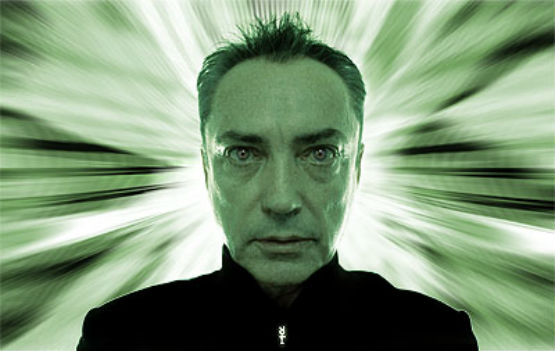
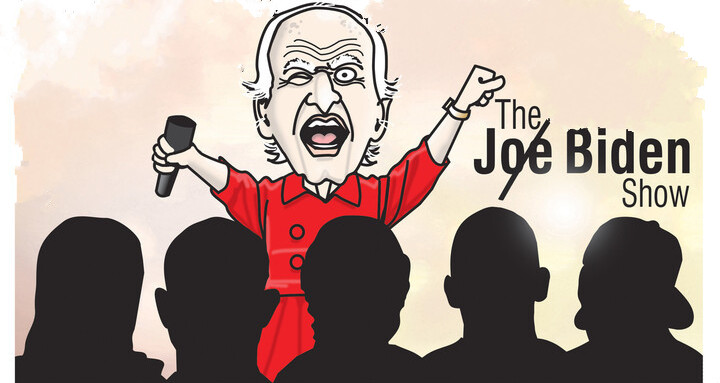
Physical Defects As The Coming Antichrist! They Are Disclosing To Us Info About The Antichrist!!! |
Like Hitler the antichrist will "have a mouth that will speak very great things, and his look will be more imposing than his fellows." He will think to change times and laws and is referred to as "The King of fierce countenance" who shall "have an understanding of dark sentences." Daniel 7:20, 25; 8:23 Because of this man all, both small and great, rich and poor, free and slave, will be forced to receive a mark on their right hand or on their foreheads, so that no one may buy or sell except one who has the mark, or the name of the beast, or the number of his name. Rev 13:16-17
This man will come on the scene and will offer to lead the world into total peace. He will be recognized throughout the world as a man of peace. He will promise to solve the Middle East conflict. He will bring harmony in the ecumenical-ecclesiastical church. He will offer economic solutions to the world's problems. He will arise as a world leader of peace and prosperity and reign exactly three and a half years as the world's greatest dictator.
Beware of when this man appears on the world scene. His leadership will take the world into a Great Tribulation of terror, wars, suffering and death.
Woe to the idol shepherd that leaveth the flock! The sword shall be upon his arm, and upon his right eye: his arm shall be clean dried up, and his right eye shall be utterly darkened. Zechariah 11:17
Read more »
('Illuminati' means 'enlightened ones'. They believe they have ultimate wisdom and truth. The illuminati have been a closely guarded secret for centuries. The Bavarian Illuminati are going to bring in this 'New World Order'.) Youtube video on "The Illuminati/All Seeing Eye" .


| Have The Elite Planned Another Global Depression? |
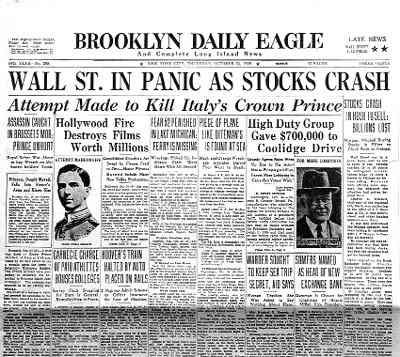
| On October 29, 1929, The Stock Market Crashed. Will it happen again? Will the world this time be rescued by and come under the control of a complete madman? |

| The NYSE. The world's largest stock exchange market. US stocks plunge amid Wall Street crisis - 29 Sept 08. A crash was so close to happening again. |

The Illuminati New World Order (NWO) conspiracy is for real.
It is unfortunate, but true.
It would be hard to believe that such an unsavory conspiracy that is so massive, so far reaching and and so dark, has a strangle-hold on humanity's very existence and its way of being.
If you are wondering if it can be true, read the quotes throughout this page for the words from presidents and world leaders who profess its coming success and its reality.
It has been a plan that has been in development for many generations, and the final chess moves are about to take place.
There are secret societies behind the world's most powerful governments, and the masses are seen as "chattel," animals to be controlled, manipulated, influenced, and used as they see fit.
While you have enjoyed many freedoms in your life, you are not as free as you have thought you were, and the freedoms you have will be fully removed if the New World Order conspiracy has its way.
It is not a conspiracy, really. It is an agenda that is put out in the open.
The New World Order is being established by the Elite of the Elites and consists of the international bankers, top government officials, leaders in the energy cartel and media monopoly owners including the Power Elite of 13 Old Line Families through the years.
This group envisions a one world banking system and currency that will give in to a cashless computer financial system, one world centralized control of global population, global control of the world’s environment, economy, trade and army.
But before they fully realize their goals there's going to be more and more false flag operations occurring with new laws being established and security cameras going up everywhere.
A giant step has already been taken in the year 1945 when they drafted and created the United Nations.
These men have unbelievable power and they have spelled out their agenda in advance.
That global agenda is constructed around six goals.

Goal #1 : The establishment of international economic order (cashless society)
Goal #2: The establishment of a one-world government
Goal #3 : The conquest and subjugation of two super powers (USA and USSR)
Goal #4: The ascension of the United States of Europe as the dominant nation in a Confederated one-world government
Goal #5: The ushering in of a supreme world leader to preside over the new unified one-world government
Goal #6 : The establishment of a one-world religion which will coordinate all the world’s religions, cults, faith groups and spiritual beliefs under the guidance of Supreme Pontiff
The method by which these are going to be brought about will most likely be either a manufactured GLOBAL ECONOMIC DEPRESSION, THIRD WORLD WAR, or MAYBE BOTH. It has been said that Albert Pike or the Freemasons have established a plan long ago that calls for Three Major World Wars that they will use to bring about their Masonic goal of a NEW WORLD ORDER.
Read more »

Close your eyes and imagine a world without electricity and modern conveniences: no Fox News, no Facebook, no email, no Blackberry, no cold drinks, no heat in the winter, no automobiles, no food and no way to cook it even if you had it.
It’s just become the end of the world as we know it.
Are you and your family going to survive?
Ours is a world of steaming hot lattes on demand, ice-cold beer in the twinkling of an eye, and internet and phone connections in a nanosecond.
We are the ultimate immediate gratification society.
And what would happen if ….
The dollar bought nothing
A virus could not be cured
Terrorists exploded nuclear bombs across the country
Hurricanes, tornadoes, earthquakes and volcanic activity all became more prevalent
Read more »

In recent years a number of countries have initiated biometric schemes aimed at protecting their borders. Although they are typically launched amid claims that they will accelerate the immigration process, this isn't always their central purpose, and frequently the new systems culminate in long queues.
Back in 2002 Australia unveiled its plans for SmartGate, a system that uses biometric facial recognition technology linked to the passenger's e-passport.

CLEAR is a private program that uses biometrics — your identity is verified through a scan of your iris or fingerprints, depending on which image is most distinctive. Clear’s biometric identity verifier is now in 24 airports (34 soon) and eight sports stadiums.

All of the data submitted by the applicant is sent to TSA, which creates an applicant's "security threat assessment" based upon a background check that's included its controversial "no-fly lists." After the verification process, each approved applicant is issued a “card” that allows them to access designated airport security fast lanes for processing through security at airports nationwide. The card also gives access to discount parking and speedy entry into major sports venues.
Dubai has established e-gates where registered passengers swipe an ID card and pass through a fingerprint scan, and the Netherlands has introduced Privium, a paid-for iris scanning service that offers a range of benefits, including lounge access and fast-track check-in.
e-Borders
Now e-Borders (electronic borders), a programme run by the UK Home Office's UK Border Agency at a likely total cost of £1.2bn, aims to tighten security at the country's borders. e-Borders is a joint programme run in partnership with the police and intelligence agencies. It requires commercial carriers and owners, or operators, of all vessels to submit detailed passenger, service and crew data in advance of their departure to and from the UK.
Read more »
(George Washington (1732-1799) Founding Father, 1st US President, 'Father of the Country'. He spoke of the Illuminati in a letter written to the Reverend G. W. Snyder (24 October 1798). He said: "It is not my intention to doubt that the doctrines of the Illuminati and the principles of Jacobinism had not spread to the United States. On the contrary, no one is more fully satisfied of this fact than I am".)

Washington issued several warnings shortly before his death, about the Illuminati. Washington knew that the Illuminati, based in Europe, had arrived on American shores. In 1789; John Robison, a Scottish scientist warned all Masonic leaders in America that the Illuminati had infiltrated into their lodges and on July 19, 1789; David Papen, President of Harvard University, issued the same warning to the graduating-class and lectured them on how Illuminism was having an influence on American politics and religion, and to top it off; John Quincy Adams, who had organized the New England Masonic Lodges, issued his warnings.
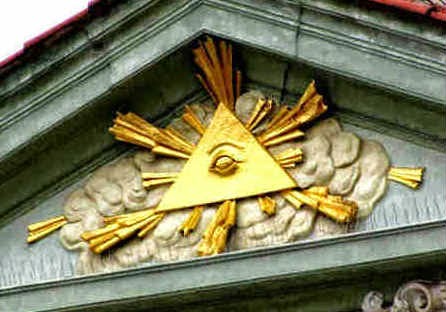
In 1786, a lodge was started in Portsmouth, Virginia, where allegedly, Thomas Jefferson was a member; followed by fourteen others in different cities of the thirteen colonies.
In April 1793 France sent new ambassador Edmond Genet to America so he could collect payment for the American debt incurred during the American Revolution. The money was to be used to finance France's war with England. However, his real reason for being here was to gain political favor for France and spread Illuminism, which he did through the establishment of 'Democratic Clubs.'
Washington said of "the clubs" that they "...would shake the government to its foundations."
Read more »
There is a possible global economic crisis coming that will lead to a financial "melt down" that the elite could use in order to establish a Global Financial Economic System. This would give centralized power to the United Nation’s International Monetary Fund and the World Bank, creating a type of "Global Federal Reserve System".


This is setting the stage for a cashless electronic currency with the use of a high tech surveillance RFID (Radio Frequency Identification) chip to be implanted under one’s skin or with biometrics.
The Global Elite, blinded by their thirst for power, orchestrate obtaining total control over the people in the excuse of providing for more transparency; a greater surveillance of the world financial markets, cross border firms, money laundering, terrorist financing, etc…
They believe that they are the only ones capable of governing mankind properly. However, these globalists know very well that people will not easily give up their freedom of the use of cash to accept these "bio-chips" or a biometric system unless there is a worldwide panic, be it financial or maybe even a flu pandemic, etc. to convince the population that the only way not to lose everything is to accept the use of a RFID chip or biometric system.
Read more »


The surveillance agent's mental load is radically optimized towards monitoring only what is most critical to security: presence and movement of (groups of) people and vehicles inside a campus/site and its buildings as well as any security-sensitive events (such as fires, smoke, badge access, assemblies, gun-shots, people running etc).
Agents can see, hear and transport their focused viewpoint through walls, floors and ceilings, zooming into a specific location to monitor it at a level so acute that it seems beyond the levels of even science fiction.
Designed to enable both wholistic site-wide and granular-level security, the system is ideal for monitoring airports, shipping ports, transit sites and other ports-of-entry, hotels, casinos, shopping malls, campuses, military bases, large buildings and building complexes, offering total situational awareness at a glance.
Read more »