The 'New World Order'

 
Home Page 2 Page 3 Page 4 Page 5 Page 6 Page 7 God's Plan
The New World Order

Global Economic Collapse, What Would Happen And How To Prepare


If an economic collapse occurs, it would happen quickly. No one would predict it. The surprise factor is, itself, one of the causes of a collapse. The signs of imminent failure are difficult for most people to see.

Most recently, the U.S. economy almost collapsed on September 17, 2008. That's the day the Reserve Primary Fund broke the buck. Panicked investors withdrew a record $140 billion from money market accounts where businesses keep cash to fund day-to-day operations. If withdrawals had gone on for even a week, the entire economy would have halted. That meant trucks would stop rolling, grocery stores would run out of food, and businesses would shut down. That's how close the U.S. economy came to a real collapse, and how vulnerable it is to another one.

Fortunately, the Federal Reserve Chairman and U.S. Treasury Secretary noticed the signal and knew what it meant. Ben Bernanke was a Great Depression scholar. Hank Paulson was a Wall Street veteran. Their bailout plan supplied enough cash to prevent a total collapse. The 2008 financial crisis did plenty of damage, but it could have been much worse.

If you want to understand what life is like during a collapse, talk to people who lived through the Great Depression. The stock market collapsed on Black Thursday. By the following Tuesday, it was down 25%. Many investors lost their life savings that weekend. The Dow didn't recover until 1954.

By 1933, one out of four people were unemployed. Wages for those who still had jobs fell.


U.S. gross domestic product was cut in half. Thousands of farmers and other unemployed workers moved to California in search of work.

Most became homeless hobos or moved to “Hooverville" shantytowns.

What Would Happen in an Economic Collapse


If the economy collapses, you would lose access to credit. Banks would close. Demand would outstrip supply of food, gas, and other necessities. If the collapse affected local governments and utilities, then water and electricity would no longer be available. As people panic, they would revert to survival and self-defense modes. The economy would return to a traditional economy, where those who grow food barter for other services.

A U.S. economic collapse would create global panic. Demand for the dollar and U.S. Treasurys would plummet. Interest rates would skyrocket. Investors would rush to other currencies, such as the yuan, euro, or even gold. It would create not just inflation, but hyperinflation, as the dollar became dirt cheap.

How Close Are We to a Total Economic Collapse?


Any of the following seven scenarios could create an economic collapse.

If the U.S. dollar rapidly loses value, it would create hyperinflation.


A bank run could force banks to close or even go out of business, cutting off lending and even cash withdrawals.


The internet could become paralyzed with a super-virus, preventing emails and online transactions. 


Terrorist attacks or a massive oil embargo could halt interstate trucking. Grocery stores would soon run out of food.  


Widespread violence erupts across the nation. That could range from inner-city riots, a civil war, or a foreign military attack. It's possible that a combination of these events could overwhelm the government's ability to prevent or respond to a collapse.


In March 2019, the Federal Reserve warned that climate change could threaten the financial system.


Extreme weather caused by climate change is forcing farms, utilities, and other companies to declare bankruptcy. As those loans go under, it will damage banks' balance sheets just like subprime mortgages did during the financial crisis. A study by Pennsylvania State University predicted that extreme weather in North America will increase 50% by 2100.

It will cost the U.S. government $112 billion per year, according to the U.S. Government Accountability Office.

Natural disasters could cause a localized collapse. If Hurricane Irma had hit Miami, its damage would have been worse than Hurricane Katrina. If the 2019 polar vortex breakup had lasted weeks instead of days, cities would have shut down.


Munich Re, the world's largest reinsurance firm, blamed global warming for $24 billion of losses in the California wildfires.

 It warned that insurance firms will have to raise premiums to cover rising costs from extreme weather. That could make insurance too expensive for most people.

 Some believe the Federal Reserve, the president, or an international conspiracy are driving the United States toward economic ruin. If that's the case, the economy could collapse in as little as a week. The economy is run on confidence that debts will be repaid, food and gas will be available when you need it, and that you'll get paid for this week's work. If a large enough piece of that stops for even several days, it creates a chain reaction that leads to a rapid collapse.


Collapse Versus Crisis


Be very clear that an economic crisis is not the same as an economic collapse. As painful as it was, the 2008 financial crisis was not a collapse. Millions of people lost jobs and homes, but basic services were still provided.

Other past financial crises seemed like a collapse at the time, but are barely remembered now. Here are some these past economic crunches:

1970s Stagflation – The OPEC oil embargo and President Richard Nixon’s abolishment of the gold standard triggered double-digit inflation. The government responded to this economic downturn by freezing wages and labor rates to curb inflation. The result was a high unemployment rate. 


Businesses, hampered by low prices, could not afford to keep workers at unprofitable wage rates.

1981 Recession – The Fed raised interest rates to end the double-digit inflation. That created the worst recession since the Great Depression. President Ronald Reagan had to cut taxes and increase government spending to end it.

1989 Savings and Loan Crisis – One thousand banks closed after illegal real estate investments turned sour. Charles Keating and the other S&L bankers had used bank depositor’s funds. The consequent recession triggered an unemployment rate as high as 7.8%. The government was forced to bail out some banks to the tune of $126 billion, an addition to the U.S. national debt.

Recession after the 9/11 Attacks – Four terrorist attacks on September 11, 2001, sowed nationwide apprehension and prolonged the 2001 recession until 2003. America’s response, the War on Terror, added $2 trillion to the already burgeoning national debt.

2008 Financial Crisis – The early warning signs were rapidly falling housing prices and increasing mortgage defaults in 2006. Left untended, the resulting subprime mortgage crisis, which panicked investors and led to massive bank withdrawals, spread like wildfire across the financial community. The U.S. government had no choice but to bail out “too big to fail” banks and insurance companies, like Bear Stearns and AIG, or face both national and global financial catastrophes.

Will the U.S Economy Collapse?


The U.S. economy's size makes it resilient. It is highly unlikely that even these events could create a collapse. When necessary, the government can act quickly to avoid a total collapse.

The Federal Reserve can avoid a financial collapse with a few phone calls. For example, it can use its contractionary monetary tools to tame hyperinflation. The Federal Deposit Insurance Corporation insures banks. There is little chance of a banking collapse similar to that in the 1930s.

The president can release Strategic Oil Reserves to offset an oil embargo. Homeland Security can address a cyber threat.8 The U.S. military can respond to a terrorist attack, transportation stoppage, or rioting/civil war. In other words, most federal government programs are designed to prevent just such an economic collapse.

But these strategies won't protect against the widespread and pervasive crises caused by climate change. Rising sea levels, depletion of fish stocks, and extreme weather are just some of the effects. If nothing is done, the World Bank warned that temperatures will increase by 4 C if nothing is done.


That's when all the ice sheets in Greenland and West Antarctica would melt.

Sea levels would rise 33 feet, flooding every major coastal city. Once sea levels rise 10 feet, it would flood 12.3 million people. Seas would continue to rise by one foot per decade. That's too fast to allow humans to build anew. The damage would exceed $600 trillion, double the total wealth of everyone on the planet.

That would shrink the global economy by 20% from what it is today. That's worse than the worst year of the Great Depression.

How to Prepare for an Economic Collapse

Protecting yourself from a collapse is difficult. A catastrophic failure can happen without warning. In most crises, people survive through their knowledge, wits, and by helping each other.

Here are six steps you can take now to prepare for a potential collapse.

Make sure you understand basic economic concepts so you can see warning signs of instability. One of the first signs is a stock market crash. If it's bad enough, a market crash can cause a recession.


Keep as many assets as liquid as possible so that you can withdraw them within a week.


As for cash, it may not be useful in a total economic collapse because its value might be decimated. 


Stockpiles of gold bullion may not help because they would be difficult to transport if you needed to move quickly. In a severe collapse, they may not be accepted as currency. But it would be good to have a stash of $20 bills and gold coins, just in case. During many crisis situations, these are commonly accepted as bribes. 

In addition to your regular job, make sure you have skills that you'd need in a traditional economy, such as farming, cooking, or repair. 


Make sure your passport is current in case you'd need to leave the country on short notice. Research target countries now and travel there on vacation, so you are familiar with your destination.


Keep yourself in top physical shape. Know basic survival skills, such as self-defense, foraging, hunting, and starting a fire. Practice now with camping trips. If you can, move near a wildlife preserve in a temperate climate. That way, if a collapse occurs, you can live off the land in a relatively unpopulated area.

‘Smart’ Cameras Are Now On The Lookout For Distracted Drivers

The age of robot surveillance is around the corner and the watchers will soon far outnumber the watched. 
 

“Smart” traffic cameras that use artificial intelligence to try to spot people using cell phones while driving are being rolled out in Australia. The devices take a high-resolution photograph through the front windshield of each passing vehicle, and also capture its license plate. Each photograph is then analyzed by an AI algorithm. If the algorithm decides that the driver is touching a mobile phone, tablet, or another device, it then forwards the photograph to a human reviewer who confirms the violation and issues a citation to the car’s registered owner along with a hefty fine.

This technology represents one of the first significant examples of something that we have warned may become common: the use of smart surveillance cameras to take the place of human police officers in visually enforcing rules and regulations of all kinds. Except these devices won’t just take the place of human officers; they’ll make it possible to greatly increase the scale and pervasiveness of enforcement agents. No jurisdiction is going to station three human police officers on every highway mile and city block to do nothing but look for and issue citations to distracted drivers — but with AI cameras, the equivalent could easily be done.

The age of robot surveillance is around the corner and the watchers will soon far outnumber the watched. The “mobile phone detection cameras” being deployed in Australia are made by a company called Acusensus, which says that its system can detect texting drivers at night, in all weather conditions, through sun glare, and at high speeds. According to the company, the “system hardware is compact and unobtrusive” — meaning easy to hide — and “detection can be performed in real-time to assist police operations.”

The company is currently pitching its product in the United States and Canada, though I have not heard of a deployment in the United States so far (and the company’s web site does not boast about such a deployment, as we would expect). I am not sure how many other companies sell competing products, though I would expect that any company with expertise in computer vision could develop a product relatively easily.

Certainly, the use of mobile phones by drivers is a very serious problem. As I’ve long pointed out, driving cannot be seen as a purely individualistic activity. What we do with and in our cars affects not just our safety but the safety of other people — and the amount of carnage on our roadways each year is devastating. As a result, driving is already a highly regulated activity. There is also substantial evidence that smartphone use while driving contributes significantly to that human toll.

But the arrival of this kind of AI monitoring technology presents us with larger decisions that we’re going to have to make as a society. Currently, cars are often considered quasi-private spaces, where people do all kinds of things, from eating to applying makeup to changing their clothes to — yes — looking at their cellphones.

We could decide as a society that the dangers of distracted driving are so high that we don’t want the interiors of our cars to be at all private, and declare them fair game for high-resolution photography that can be scrutinized by government officials. We have no independent information about how accurate the Australian systems is, or how others like them will be, though some false positives are inevitable. That means that every driver will be subject to having their photograph randomly scrutinized by the authorities.

We should expect that these devices will be able to pick up other things besides texting. Already the Australian vendor boasts that the system can be set to flag behaviors including “eating, drinking and smoking, adjusting vehicle settings (radio, etc.), and use of mobile and navigation devices in a holder.” Whether the AI can discriminate between a driver drinking a beer and a root beer is unclear, which means that a swig of any beverage behind the wheel could get a photo of you scrutinized by the authorities.

Photographs may expose other things as well, from the presence of guns or drugs to on-the-road sexual activities, as well as private things like reading material, intimate personal effects, and passengers and drivers adjusting their clothes in ways that reveal their bodies at times they reasonably believe they can’t be seen by others. In the absence of tight controls over the handling of photographs, some revealing photographs will inevitably be saved and shared for voyeuristic purposes by those whose job it is to review them.

In Australia, the vendor says that its system shows only images of the drivers, not passengers, to the human reviewers, though we don’t know how reliable the automated redaction of photos is, or whether other vendors would also follow this practice. In media reports (though not on its web site), the company also says it quickly deletes photographs in which the AI finds no sign of a violation. But in New South Wales, 8.5 million photographs were taken in just a six-month period; that kind of photographic database might prove valuable in all kinds of ways that a for-profit company would want to exploit. A system with the power of this one should never be deployed with privacy protections that depend on the promises and voluntary practices of a company; it should be subject to statutory protections.

If we decide as a society to allow these devices to be deployed, we might require that drivers be given notice of their locations so that they can adjust their behavior. Or, we might allow them to be deployed without public notice to better deter dangerous behavior. That would create a “panopticon effect” in which everybody must act as if they are being scrutinized by the authorities at every moment since they never know at what moments they actually will be, creating in drivers “a state of conscious and permanent visibility.”

That would represent a fairly significant change in what it is like to drive in America. If we make a decision as a society to routinely extend the eye of the state into the interior of our vehicles in this way, that is a decision that a) should be known to all, and b) made through transparent democratic processes. The decision should not be made by police departments unilaterally throwing the technology into our public spaces without asking or even telling the communities they serve. That is something we’ve seen happen with too many other technologies, including license plate scanners, aerial surveillance, and face recognition. In cities where our recommended “Community Control Over Police Surveillance” legislation has been enacted, democratic review will be required, but police departments in every city and state should leave this decision to the communities they serve.

The other thing we must consider if we decide to permit this technology to be used is where things will go from there. Already a number of companies are selling in-vehicle “fleet cameras” designed to monitor employees who drive for a living, subjecting those workers to constant robot surveillance and judgment. Personal vehicles, too, are beginning to feature cameras that monitor drivers for distraction or drowsiness.

And AI smart cameras may well end up covering much more mundane behaviors. We could find ourselves fined for such offenses as cutting the edge of a crosswalk or putting materials in the wrong recycling bin. (That latter scenario is not such a stretch; some municipal governments in the United States have already equipped garbage trucks with video cameras that monitor the bins being emptied at each residence to determine if the right materials are coming out of each container, facilitating fines for noncomplying residents.)

Aside from privacy issues, these cameras would also raise other questions:

• Would there be racial bias in their deployment patterns or in the adjudications that human reviewers make of ambiguous photos?

• Would decisions to charge based on photos be made by sworn police officers only? With red-light cameras, we saw deployments that gave vendors a role in deciding guilt and innocence — and running the program in ways that created financial incentives to increase tickets.

• Would the cameras be fair? Unlike a citation issued by a live officer, automated accusations arrive by mail (if they arrive at all) long after the alleged violation. That makes it harder for people to recollect the circumstances of the violation to dispute a charge based on errors or extenuating circumstances.

• As with red-light cameras, there are also fairness questions around the fact that a car’s owner is the one cited when someone else could have been driving it.

Stopping texting drivers to lower traffic deaths is the kind of sympathetic goal that new surveillance technologies are always first deployed to address. But, as we consider going down that road, we need to figure out where we will draw the line against automated surveillance, lest we end up being monitored by armies of digital sticklers scolding, flagging, and fining us at every turn.


Maps Displaying Mounted Surveillance Cameras On
 Interstate Highways And Streets Around Atlanta, Ga.

 (Zoomed Out View)


 (Zoomed In View)

'The Entire System Is Designed to Suppress Us.'

What the Chinese Surveillance State Means for the Rest of the World


Every morning, Mrs. Chen dons her bright purple tai chi pajamas and joins the dozen or so other members of Hongmen Martial Arts Group for practice outside Chongqing’s Jiangnan Stadium. But a few months ago, she was in such a rush to join their whirling sword-dance routine that she dropped her purse. Fortunately, a security guard noticed it lying in the public square via one of the overhead security cameras. He placed it at the lost and found, where Mrs. Chen gratefully retrieved it later.  

“Were it not for these cameras, someone might have stolen it,” Mrs. Chen, who asked to be identified by only her surname, tells TIME on a smoggy morning in China’s sprawling central megacity. “Having these cameras everywhere makes me feel safe.”

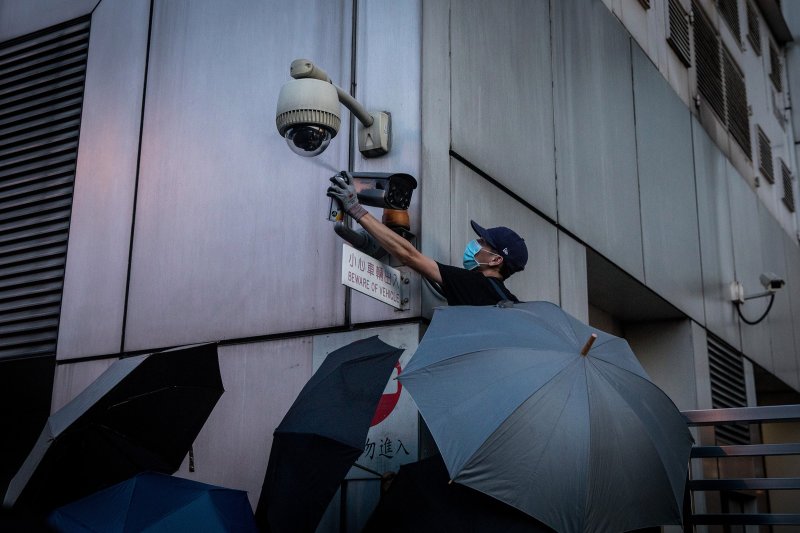
What sounds like a lucky escape is almost to be expected in Chongqing, which has the dubious distinction of being the world’s most surveilled city. The seething mass of 15.35 million people straddling the confluence of the Yangtze and Jialing rivers boasted 2.58 million surveillance cameras in 2019, according to an analysis published in August by the tech-research website Comparitech. That’s a frankly Orwellian ratio of one CCTV camera for every 5.9 citizens—or 30 times their prevalence in Washington, D.C.


Every move in the city is seemingly captured digitally. Cameras perch over sidewalks, hover across busy intersections and swivel above shopping districts. But Chongqing is by no means unique. Eight of the top 10 most surveilled cities in the world are in China, according to Comparitech, as the world’s No. 2 economy rolls out an unparalleled system of social control. Facial–recognition software is used to access office buildings, snare criminals and even shame jaywalkers at busy intersections. China today is a harbinger of what society looks like when surveillance proliferates unchecked.

But while few nations have embraced surveillance the way China has, it is far from alone. Surveillance has become an everyday part of life in most developed societies, aided by an explosion in AI–powered facial–recognition technology. Last year, London police made their first arrest based on facial recognition by cross–referencing photos of pedestrians in tourist hot spots with a database of known felons. A few months earlier, a trial of facial–recognition software by police in New Delhi reportedly recognized 3,000 missing children in just four days. In August, a wanted drug trafficker was captured in Brazil after facial-recognition software spotted him at a subway station. The technology is widespread in the U.S. too. It has aided in the arrest of alleged credit-card swindlers in Colorado and a suspected rapist in Pennsylvania.

Still, the risks are considerable. As Western democracies enact safeguards to protect citizens from the rampant harvesting of data by government and corporations, China is exporting its AI-powered surveillance technology to authoritarian governments around the world. Chinese firms are providing high-tech surveillance tools to at least 18 nations from Venezuela to Zimbabwe, according to a 2018 report by Freedom House. China is a battleground where the modern surveillance state has reached a nadir, prompting censure from governments and institutions around the globe, but it is also where rebellion against its overreach is being most ferociously fought.

“Today’s economic business models all encourage people to share data,” says Lokman Tsui, a privacy expert at the Chinese University of Hong Kong. In China, he adds, we are seeing “what happens when the state goes after that data to exploit and weaponize it.”

Some 1,500 miles northwest of where Mrs. Chen recovered her purse, surveillance in China’s restive region of Xinjiang has helped put an estimated 1 million people into “re-education centers” akin to concentration camps, according to the U.N. Many were arrested, tried and convicted by computer algorithm based on data harvested by the cameras that stud every 20 steps in some parts.

In the name of fighting terrorism, members of predominantly Muslim ethnic groups—mostly Uighurs but also Kazakhs, Uzbeks and Kyrgyz—are forced to surrender biometric data like photos, fingerprints, DNA, blood and voice samples. Police are armed with a smartphone app that then automatically flags certain behaviors, according to reverse engineering by the advocacy group Human Rights Watch. Those who grow a beard, leave their house via a back door or visit the mosque often are red-flagged by the system and interrogated.

Sarsenbek Akaruli, 45, a veterinarian and trader from the Xinjiang city of Ili, was arrested on Nov. 2, 2017, and remains in a detention camp after police found the banned messaging app WhatsApp on his cell phone, according to his wife Gulnur Kosdaulet. A citizen of neighboring Kazakhstan, she has traveled to Xinjiang four times to search for him but found even friends in the ruling Chinese Communist Party (CCP) reluctant to help. “Nobody wanted to risk being recorded on security cameras talking to me in case they ended up in the camps themselves,” she tells TIME.

The New World Order Is Ruled By Global Corporations And Megacities—Not Countries

As cities and companies gain in influence and the power of nation-states decreases, the world is undergoing a seismic transformation.
 

Ask yourself, honestly: If Uruguay or Guinea-Bissau disappeared off the face of the Earth, would you really notice? Now what about if Google disappeared from your Internet browser or Coca-Cola from your grocery store shelves?

We all know that quite a few corporations or terrorist groups have more influence in the world than many states do, but have yet to place them all in a single framework that measures them according to their reach and relevance. And yet such a “Mindshare Matrix” is precisely what we need to properly understand the 21st century landscape of power. Rather than comparing only apples to apples (countries to countries, companies to companies) in silos–as all existing rankings of power, wealth, brand recognition, or other assets do–this matrix would place countries, cities, companies, cyber-communities, and other contenders on the same playing field.

Consider how an American or French citizen can kill in the name ISIS, a non-state terrorist regime in Syria where the civil war it stokes has caused a refugee wave of more than one million migrants into Europe alone, shaking the world’s wealthiest nations’ domestic and foreign policies. Or how Argentines have been using the cryptocurrency Bitcoin to evade their government’s capital controls, undermining a once hot emerging market’s credibility in global financial markets. Whether acting as a state or serving as the conduit to evade one, ISIS and Bitcoin—or Anonymous and Telegram—blur the traditional boundaries between domestic and international, physical and virtual. They are perfectly at home though in the Mindshare Matrix, where loyalty is up for grabs.

THE 5 “CS” OF A COMPLEX WORLD


A simple typology helps us to understand the range of players competing in the Mindshare Matrix. These are roughly the 5 “Cs”: countries, cities, commonwealths, companies, and communities. What matters more than their latent power—nuclear weapons or cash piles—is their ability to deploy resources to build leverage within the system. Power, then, is a function of connectivity—only the most connected powers can win.

Let’s start with countries. There are only a handful of “systemically relevant” countries on the global stage, to borrow a phrase from the global financial regulatory lexicon. The U.S. and China stand out as superpowers, with the U.S. leading in military and monetary terms and China edging ahead in trade and outbound infrastructure investment. China is now the largest trade partner of 124 countries, more than twice as many as the U.S. (52).

Meanwhile, second-tier states such as Russia, India, and Brazil are as fragile as they are ambitious. Emerging powers from Nigeria to Iran to Indonesia are, at most, regionally influential. As for the remaining mostly postcolonial states created since World War II, more than one hundred of them together represent less than 3% of global GDP and an even lower share of world trade—they lack both economic mass and international connectivity. What Adam Smith mused about 18th century China applies to them in spades: If it were “swallowed up by an earthquake,” even civilized observers would make little more than “melancholy reflections” and express “humane sentiments,” but ultimately would return to their business or pleasure “with the same ease and tranquility, as if no such accident had happened.” In other words, they just don’t occupy much mindshare. For better or worse, if half the countries in the world sunk into the sea, as is happening to the Maldives and Kiribati, it’s not likely it would be covered on the evening news in America (and certainly not during an election year)—unless Madonna or Angelina Jolie were on holiday or adopting a child there.

There are quite a few more systemically relevant companies than there are countries. More than 30 financial institutions have consolidated assets greater than $50 billion each—meaning each has more assets than two-thirds of the world’s countries produce in annual GDP. For hundreds of millions of customers around the world today, bank accounts are a lifeline as or more important than citizenship. Looking beyond banks, there are fewer than five countries in the world whose GDP is larger than the more than $200 billion of liquid cash Apple holds in securities worldwide, meaning Apple could buy many countries’ combined output (minus their debt). Having sold almost 2 billion products to more than one billion people, Apple not only has more money but also occupies greater mindshare than most nations as well.

Importantly, many of the world’s largest and most powerful private companies are no longer (if they ever were) agents of their “home” countries; they are becoming stateless superpowers in their own right. America’s consistent soft power appeal is rooted to some degree in the appeal of it brands: From Microsoft to McDonald’s, American companies dominate the advertising giant WPP’s brand index in visibility and reputation. But many of these companies are not so much American as “American.” Their brands transcend their national origin—as do their commercial ambitions. Whereas countries need companies as ambassadors, the reverse is far less true. It is no surprise then that Facebook or Coca-Cola can enjoy such success worldwide irrespective of foreign publics’ sentiment toward the U.S. The high-profile cases of American corporations using transfer pricing and inversions to create conglomerates domiciled in low-tax jurisdictions to evade U.S. corporate taxes are further evidence that companies increasingly view countries not as sovereign masters to be obeyed but jurisdictions to be negotiated. Just ask Halliburton—but make sure you call during daylight hours in Dubai, to which it has shifted its global headquarters.

Because foreign investment dwarfs official aid flows, and brings with it jobs, skills, and technology, companies hold growing leverage over where to locate their operations. Governments have become what early political economist Susan Strange called “supplicants” engaged in a “triangular diplomacy” with firms to attract their catalytic benefits. The first thing new Kenyan president Uhuru Kenyatta said (as do so many other leaders desperate to reassure markets) upon taking office in 2013 was that his country is “open for business.”

Small and weak countries in Africa and Southeast Asia are learning that the only way to have influence in a Matrix that cares more about connectivity than sovereignty is to lash together into currency and customs unions, free trade areas, or infrastructure-sharing agglomerations—anything to make them appear a larger market to invest in or to increase their bargaining power in negotiations. The Caribbean CARICOM, East African Community (EAC), and Southeast Asian ASEAN group all strive to be low-grade versions of the European Union, the archetype of the third “C”: commonwealths. The world is becoming a collection of these internally borderless mega-regional groupings–including even the South American Union and eventually, as the successor to NAFTA, a North American Union.

These commonwealths are far more relevant players than the civilizations hypothesized by the late Harvard professor Samuel Huntington. Neither Christianity nor Islam (nor any other religion) has the coherence that these regional groupings are acquiring. The European Union, for example, remains the largest economic block in the world, and the 600 million citizens of ASEAN represent a larger GDP than India and attract more FDI than China. These regional confederations are much more the building blocks of the future world order than countries.

All cities belong to some state or the other, but in the Matrix, many cities matter as much to the world as to their home country.


So too are cities (the fourth “C”). Germany may be a more important country in the world than the U.K., but London is a far more connected and influential city than any other in Europe. All cities belong to some state or the other, but in the Matrix, many cities matter as much to the world as to their home country–which is often a mere hinterland to the city. That is certainly the case in London, whose financial industry and real estate market are global centers of gravity while the city sucks all the talent from the rest of the U.K. In emerging markets, Sao Paulo, Lagos, Moscow, Johannesburg, and many other cities represent one-third to one-half of their national GDP. Developing-world megacities from Cairo to Mumbai to Manila have populations so large, and expanding geography so vast, that they have become urban archipelagos unto themselves whose orbit most “city-zens” will never actually leave. Not surprisingly, the popularity of mayors from Buenos Aires to Istanbul to Jakarta has propelled them to become heads of state in record numbers.

The 5th “C”—communities—is the ultimate expression of a Matrix world in which mindshare constitutes a discreet form of authority on par with national sovereignty. Diasporas and religious groups, to the extent they can congeal into meaningful associations, belong in this trans-territorial category. The Chinese, Indian, and Jewish diasporas, for example, are rich cultural and financial zones spanning every continent contributing to the $540 billion in remittances logged in 2014.

These are the largest of the “cloud communities” whose overall number and size are growing thanks to the Internet, which Wikileaks founder Julian Assange credits with enabling connected groups to anneal into empowered collectives. Nearly universal digital utilities such as Facebook are expected to run themselves as pro-member communities with greater, almost Constitution-like transparency within as they pursue their state-like agendas to expand connectivity worldwide to increase their user base (or membership). But social networks don’t hold sovereign territory and neither do citizens in any traditional or legal sense–rather they provide the tools for people to shape their welfare in an era where ever more of our personal, professional, and commercial life is mediated online. These ties can be used to motivate and crowd-finance virtual and real-world activities using cryptocurrencies.

Hacker groups such as Anonymous, the digital recruiting militants of ISIS, the recently terminated online drug bazaar Silk Road, the Facebook groups that helped self-organize the young revolutionaries of the Arab Spring, and many other cyber networks don’t exist just to challenge states but to serve their own agendas—often against each other. North Korean hackers steal data from Hollywood studios, Al Qaeda and ISIS compete for turf in Africa, Anonymous declares war on ISIS. If nations are merely “imagined communities” as the late Benedict Anderson famously termed it, then Facebook groups and other cloud communities can seem just as real.

FROM FOLLOWERS TO BELIEVERS


Assessing the wide spectrum of the 5 Cs together rather than separately helps us to appreciate today’s bewildering complexity. Indeed, the most fundamental attribute of our emergent global system isn’t the shift from unipolarity to multipolarity (structural change), but rather the shift from a state-centric order to a multi-actor arena (systems change). Structural change happens every few decades; systems change only every few centuries. Structural change makes the world complicated; systems change makes it complex. The forces of capital and technology, which are accelerating the rise of non-state authorities, cannot be put back in the bottle by any hegemon, whether America or China.

Have we reached the tipping point where loyalty to horizontal or digital tribes truly supersedes the sense of belonging to vertical nation-states?

The forces of capital and technology, which are accelerating the rise of non-state authorities, cannot be put back in the bottle by any hegemon, whether America or China.


The recently published Global Trends 2030 report of the National Intelligence Council titled “Alternative Worlds” includes a very plausible scenario in which urbanization, technological advance, and capital accumulation accelerate the rise of private entities who effectively govern far-flung populations through supply chains and special economic zones (SEZs). “It is as if the central government acknowledges its own inability to forge reforms and then subcontracts out responsibility to a second party. In these enclaves, the very laws, including taxation, are set by somebody from the outside. Many believe that outside parties have a better chance of getting the economies in these designated areas up and going, eventually setting an example for the rest of the country.” My only quibble with this fine analysis is that it describes the world of 2013, not 2030.

The scenario is illustrative of how supply chain operators have already begun to command loyalty. As Western governments cut public payrolls, millions of citizens have been left to fend for themselves amidst fewer benefits and higher taxes. Especially among youth, the future will be one of self-sufficiency rather than entitlement. National welfare, then, increasingly depends on the provision of employment by companies, and the economic activity and tax revenue they generate. In countries such as Greece, the lucky employed ask themselves: How much time does one spend as an engaged citizen in the public sphere, versus just getting by however one can?

For those in the developing world not fortunate to leave home, de facto loyalty shifted from state to firm long ago. From the city of Jamshedpur in India, whose company-run services make it effectively a wholly owned subsidiary of Tata Steel, to FoxConn’s assembly plants across China, major corporations are not only a source of employment, but also skills training and thus relevance in the global economy. Whereas a half-century ago, there were only a half-dozen such SEZs. Today there are more than four thousand, making these new-age factory towns the world’s most rapidly spreading urban form.


The rise of thousands of pop-up cities is a major indication of the shift toward a hybrid public-private Matrix world. So too is the movement of people to them, both within and across borders. Migration provides very tangible evidence of the unmooring of nationality as the sole anchor of actionable loyalty. There are now more migrants than ever in history, nearly 300 million, with a sizeable proportion potentially never returning “home.” These hundreds of millions of expats occupy every rung of the value chain from corporate executives in Asia to third-world guest workers in the Middle East. The highest number of Americans ever recorded, more than 9 million, now live abroad, with a record number—more than 4,000—giving up their U.S. citizenship each year. Despite the high-profile efforts of Facebook to lobby for larger visa quotas to recruit programmers to the U.S., most Silicon Valley technology companies are devoting their efforts in the opposite direction: Building their presence in fast-growing emerging markets. Will America experience brain drain as the quality of life in high-growth markets improves even more?

Furthermore, the more spending power Brazilians, Nigerians, Emiratis, Russians, Indians, and Chinese accrue, the more their passports are welcome visa-free in the West. At the same time, the automatic privileges of Western passports may erode given security concerns that Canadians, Americans, Swedes, British, and French citizens could also be ISIS members. The likely solution: A blockchain-based passport system linked to individual credentials rather than national identity. Your human right to mobility will be linked more to who you are today than the incidental fact of where you were born. This is not only a wonderful potential evolution on centuries of institutional prejudice, it also implies a world full of individuals for whom geographical roots are secondary to connectedness and access. Talk of “global citizens” won’t just be reserved for idealistic Model UN conferences.

One place is already becoming a stateless melting pot: Dubai. The world’s fastest-growing city, Dubai is already populated more than 90% by foreigners and allowing in on average more than 1 million people each decade with ambitious plans to colonize the desert. The millions of foreigners in Dubai will likely never become citizens of the United Arab Emirates, yet they are increasingly loyal to the place that allows them tax-free living and nonstop global connectivity. You can measure mindshare by seeing how people vote—with their feet.

The more mobility people have—physical and virtual—the more their loyalty will pass to whomever provides them with security and skills. This is how companies excel where governments have failed.


The more mobility people have—physical and virtual—the more their loyalty will pass to whomever provides them with security and skills. This is how companies excel where governments have failed. Some companies spend more on upgrading employee skills than than entire countries do on education. WPP, whose annual profits hover around $16 billion, invests nearly $100 million per year on the training and well-being of its staff of 158,000, with greater numbers in the BRIC countries than the U.S. and U.K. combined. PWC conducts constant “re-skilling” of workers to transition to higher growth client sectors. DHL and Unilever, the world’s most extensive supply chain operators who can reach geographies that the Internet still hasn’t, sponsor frequent staff relocations to experience life with clients and counterparts in diverse markets.

Virtual connectivity is also building new and more stable loyalties. In a world that is more geodesic than geographic, the “where” becomes much less important than the “what.” Facebook’s 1 billion members therefore don’t compete with nations, they transcend them. Facebook is not a country but a conduit for generating flash mobs of allegiance. China and other countries may seek to impose an oxymoronic “network sovereignty” on free access to information within their geographic borders, but this ultimately won’t stop the flows of data that make the Internet as a whole a universe of association and competition for mindshare.

Countries run by supply chains, cities that run themselves, communities that know no borders, and companies with more power than governments—all are evidence of the shift toward a new kind of pluralistic world system. The ranks of such global authorities that belong in a holistic Mindshare Matrix are rapidly growing.

Boston Dynamics’ Spot Is Leaving The Laboratory


A new leasing program is putting dozens of robots to work in the real world

Boston Dynamics is letting its first major robot out of the lab.

Since June, the company has been talking about a public release for its Spot robot (formerly SpotMini), and today, it finally gave some details about what’s in store. The Spot isn’t going on sale exactly, but if you’re a company with a good idea (and some money), you’ll be able to get one. That also means, for the average person on the street, that the odds of seeing a Spot in the wild just got a lot better.

The capabilities are more or less what the company showed off in June, but it’s still impressive to see them in person. The Spot can go where you tell it, avoid obstacles, and keep its balance under extreme circumstances — which are all crucial skills if you’re trying to navigate an unknown environment.

The Spot can also carry up to four hardware modules on its back, giving companies a way to swap in whatever skills the robot needs for this particular job. If it’s checking for gas leaks, you can build in a methane detector. If you need connectivity over longer distances, you can attach a mesh radio module. Boston Dynamics is already outfitting units with LIDAR rigs from Velodyne (a favorite component for self-driving car projects) to create 3D maps of indoor spaces. Since the Spot is designed to work in the rain, outdoor spaces are on the table, too.

There are also the Spot’s dance moves, which usually come programmed into an offboard computing module. You might think the “Uptown Funk” routine was just PR, but entertainment is shaping up to be one of the biggest markets for the Spot. Boston Dynamics is already working with the innovation lab at Cirque du Soleil to see what it might be like to use the Spot onstage.

During our tests, we were instructed to stay two meters away from the Spot to keep from being pinched by its joints. We also gave it a wide berth when it was climbing stairs to make sure no one would be hurt if it lost its balance and fell. Both measures seemed to be more about Boston Dynamics being careful rather than the Spot being hazardous, but it’s a reminder that the robot simply wasn’t designed to interact with humans. For now, Boston Dynamics is focusing on uses in closed and controlled spaces, so it’s unlikely you’ll see a Spot wandering around your local mall anytime soon.

The company was also quick to say that it’s not interested in using the Spot as a weapon, despite the company’s military origins. “Fundamentally, we don’t want to see Spot doing anything that harms people, even in a simulated way,” says Michael Perry, VP of business development at Boston Dynamics. “That’s something we’re pretty firm on when we talk to customers.” (Boston Dynamics is still marketing to police departments, but it says the Spot would be limited to disposing of bombs and other hazardous materials, along the lines of existing police robots.)

The Spot is still a long way from anything like full autonomy, despite the impression you might get from the videos. One popular demo from last year shows the Spot opening a door by carefully turning the handle, pulling back the door, and propping it open with one leg to keep it from closing as the robot passed through. Some of the robotics researchers I talked to were fascinated by this demo: did it mean that the Spot could recognize doors, find handles and open them in the wild? Asked to navigate a path, would the Spot recognize which obstacles were walls and which were doors to be opened?

The real answer turns out to be simpler. The video shows the Spot’s “handle” protocol, which the controller initiates by navigating the claw toward the door and identifying the handle. Actually opening the door requires deft navigation of the physical forces involved, bracing the Spot’s body in a way that’s nearly impossible for a human operator to replicate — but it’s all athletic intelligence, not interpretive intelligence. The Spot isn’t in the business of recognizing doors or responding to cues from the physical world. In fact, the Spot’s model of the world around it is pretty shallow, consisting mostly of obstacles, footholds, and preprogrammed routes.

That’s the opposite of what many academic roboticists focus on, and Henny Admoni, who works on Human-Robot interaction at Carnegie Mellon University, told me it was an understandable but tricky trade-off. “Boston Dynamics has always been strong in mechanics and controls, like being able to shift the robot’s weight properly,” Admoni told me. “But robots operating in human environments won’t really have the option of avoiding humans. Integrating Human-Robot Interaction skills into development at an early stage is probably going to lead to greater success than trying to retrofit human interaction into existing systems.”

That’s not the path Boston Dynamics has taken, and the Spot’s interactions with human beings remain a major question mark for the project’s future. For now, the company is hoping that there’s enough work to do in human-free spaces.

Still, there’s a lot the Spot can do that simply wasn’t possible before, and it’s easy to see why Boston Dynamics is excited. The last 20 years have seen huge advances in automation, but it’s still largely confined to the digital world. If the platform takes off, the Spot could offer a new way for computer programs to interact with the physical world, a power that could have an enormous impact on technology and society at large. We’re still at the beginning of that process, but teaching a robot how to walk could turn out to be the most important step.


FRIGHTENING FREQUENCIES: THE DANGERS OF 5G


As the old saying goes, give us an inch and inevitably we’ll want a mile. And certainly, this sentiment is true with technology.

Who doesn’t want faster, bigger (or smaller), more efficient? Take wireless mobile telecommunications. Our current broadband cellular network platform, 4G (or fourth generation), allows us to transmit data faster than 3G and everything that preceded. We can access information faster now than ever before in history. What more could we want? Oh, yes, transmission speeds powerful enough to accommodate the (rather horrifying) so-called Internet of Things. Which brings us to 5G.

Until now, mobile broadband networks have been designed to meet the needs of people. But 5G has been created with machines’ needs in mind, offering low-latency, high-efficiency data transfer. It achieves this by breaking data down into smaller packages, allowing for faster transmission times. Whereas 4G has a fifty-millisecond delay, 5G data transfer will offer a mere one-millisecond delay–we humans won’t notice the difference, but it will permit machines to achieve near-seamless communication. Which in itself  may open a whole Pandora’s box of trouble for us – and our planet.

More bandwidth – more dangers of 5G


Let’s start with some basic background on 5G technology. Faster processing speeds require more bandwidth, yet our current frequency bandwidths are quickly becoming saturated. The idea behind 5G is to use untapped bandwidth of the extremely high-frequency millimeter wave (MMW), between 30GHz and 300GHz, in addition to some lower and mid-range frequencies.

High-frequency MMWs travel a short distance. Furthermore, they don’t travel well through buildings and tend to be absorbed by rain and plants, leading to signal interference. Thus, the necessary infrastructure would require many smaller, barely noticeable cell towers situated closer together, with more input and output ports than there are on the much larger, easier to see 4G towers. This would likely result in wireless antennas every few feet, on every lamp post and utility pole in your neighbourhood.

Here are some numbers to put the dangers of 5G into perspective: as of 2015, there were 308,000 wireless antennas on cell towers and buildings. That’s double the 2002 number. Yet 5G would require exponentially more, smaller ones, placed much closer together, with each emitting bursts of radiofrequency radiation (RFR)–granted, at levels much lower than that of today’s 4G cell towers–that will be much harder to avoid because these towers will be ubiquitous. If we could see the RFR, it would look like a smog that’s everywhere, all the time.

Serious health concerns


First, it’s important to know that in 2011, the World Health Organization’s International Agency for Research on Cancer classified RFR as a potential 2B carcinogen and specified that the use of mobile phones could lead to specific forms of brain tumors.

Many studies have associated low-level RFR exposure with a litany of health effects, including:

DNA single and double-strand breaks (which leads to cancer)


oxidative damage (which leads to tissue deterioration and premature ageing)
disruption of cell metabolism


increased blood-brain barrier permeability

melatonin reduction (leading to insomnia and increasing cancer risks)


disruption of brain glucose metabolism


generation of stress proteins (leading to myriad diseases)


As mentioned, the new 5G technology utilizes higher-frequency MMW bands, which give off the same dose of radiation as airport scanners. The effects of this radiation on public health have yet to undergo the rigours of long-term testing. Adoption of 5G will mean more signals carrying more energy through the high-frequency spectrum, with more transmitters located closer to people’s homes and workplaces–basically a lot more (and more potent) RFR flying around us. It’s no wonder that apprehension exists over potential risks, to both human and environmental health.

Perhaps the strongest concern involves adverse effects of MMWs on human skin. This letter to the Federal Communications Commission, from Dr Yael Stein of Jerusalem’s Hebrew University, outlines the main points. Over ninety percent of microwave radiation is absorbed by the epidermis and dermis layers, so human skin basically acts as an absorbing sponge for microwave radiation. Disquieting as this may sound, it’s generally considered acceptable so long as the violating wavelengths are greater than the skin layer’s dimensions. But MMW’s violate this condition.

Furthermore, the sweat ducts in the skin’s upper layer act like helical antennas, which are specialized antennas constructed specifically to respond to electromagnetic fields. With millions of sweat ducts, and 5G’s increased RFR needs, it stands to reason that our bodies will become far more conductive to this radiation. The full ramifications of this fact are presently unclear, especially for more vulnerable members of the public (e.g., babies, pregnant women, the elderly), but this technology

What’s more, MMWs may cause our pain receptors to flare up in recognition of the waves as damaging stimuli. Consider that the US Department of Defense already uses a crowd-dispersal method called the Active Denial System, in which MMWs are directed at crowds to make their skin feel like it’s burning, and also has the ability to basically microwave populations to death from afar with this technology if they choose to do so. And the telecommunications industry wants to fill our atmosphere with MMWs?

5G harms animals, most of all


Unfortunately, innocent animals have already been the victims of testing to see MMW’s effects on living cells. Extrapolating the results from animal testing to humans isn’t straightforward, but the results nonetheless raise some serious red flags. Perhaps most significantly, a US National Toxicology Program study noted that male rats exposed to RFR for nine hours a day over two years developed rare forms of tumours in the brain and heart, and rats of both sexes developed DNA damage.

The researchers noted that the increased risk to the rats was relatively small; but if these findings translate to humans, the widespread increase in cellphone use could have a significant impact on populations. Thus the NTP study served to renew the debate about the potential harmful effects of cellphones on human health. Not only that, it caused a significant shift in the American Cancer Society’s understanding of radiation and cancer, and sparked them to state that our ignorance of RFR’s impact on human health could be compared to our previous obliviousness to the connection between smoking and lung cancer.

Other animal research worldwide illustrates how microwave radiation in general and MMW’s in particular can damage the eyes and immune system, cell growth rate, even bacterial resistance. An experiment at the Medical Research Institute of Kanazawa Medical University showed that 60GHz millimeter-wave antennas produce thermal injuries in rabbit eyes, with thermal effects reaching below the eye’s surface.

This study, meanwhile, suggests low-level MMW’s caused lens opacity–a precursor to cataracts–in rats’ eyes. A Chinese study demonstrated that eight hours’ of microwave radiation damaged rabbits’ lens epithelial cells. A Pakistani study concluded that exposure to mobile phone EMF prevented chicken embryo retinal cells from properly differentiating.

This Russian study revealed that exposing healthy mice to low-intensity, extremely high-frequency electromagnetic radiation severely compromised their immune systems. And a 2016 Armenian study concluded that low-intensity MMW’s not only depressed the growth of E. coli and other bacteria, but also changed certain properties and activity levels of the cells. The same Armenian study noted that MMW interaction with bacteria could lead to antibiotic resistance – distressing news, considering immunity to bacteria is already compromised due to the overuse of antibiotics.

Finally, one other study I’m aware of says that various animal studies show a significant effect of microwaves in the 5G frequency range on mammals, avian species, and insect pollinators such as honey bees. There also appears to be a negative impact on plant life in the vicinity of cellphone towers to the point where there are notable decreases in fruit and other crop yields.

Again, if these findings translate to humans, our rampant cellphone use would likely cause profound, adverse health effects; an increase in MMW’s as more bandwidth is introduced could further complicate the matter.

But what’s also important to note here is that the danger of 5G technology can not only have a profound impact on human health, but on the health of all living organisms it touches, including plants, as we shall see in more detail, below.

The dangers of 5G extends to the planet, too


Equally disturbing, 5G technology puts environmental health at risk in a number of ways. First, MMWs may pose a serious threat to plant health. This 2010 study showed that the leaves of aspen seedlings exposed to RFR exhibited symptoms of necrosis, while another Armenian study suggested low-intensity MMW’s cause “peroxidase isoenzyme spectrum changes”–basically a stress response that damages cells–in wheat shoots. Plant irradiation is bad news for the planet’s flora, but it’s bad news for us, too: it could contaminate our food supply.

Second, the 5G infrastructure would pose a threat to our planet’s atmosphere. Network implementation will require the deployment of many, short-lifespan satellites via suborbital rockets propelled by hydrocarbon rocket engines. According to this 2010 California study, launching too many of these babies will vomit enough black carbon into the atmosphere to pollute global atmospheric conditions, affecting distribution of ozone and temperature. Worse, solid-state rocket exhaust contains chlorine, an ozone-destroying chemical. How can any government seriously concerned about climate change allow for this?

Third, 5G will potentially threaten natural ecosystems. According to several reports over the last two decades–some of which are summarized here–low-level, non-ionizing microwave radiation affects bird and bee health. It drives birds from their nests and causes plume deterioration, locomotion problems, reduced survivorship and death. And bee populations suffer from reduced egg-laying abilities of queen bees and smaller colony sizes. More evidence of ecosystem disruption comes from this 2012 meta-study, which indicates that 593 of 919 research studies suggest that RFR adversely affects plants, animals and humans.

It bears repeating: 5G is bad news for all living creatures and the planet we share.

Beware the propaganda deluge


Despite being fully aware of all these unsettling results, threats and concerns, the US corporatocracy continues to maintain a gung-ho attitude about 5G. The Mobile Now Act was passed in 2016, and many US states have since gone ahead with 5G plans. The telecom industry’s biggest players have basically co-opted government powers to enforce their 5G agenda, with companies like AT&T and Qualcomm having begun live testing. And despite research showing serious threats to humans and the planet, the FCC Chairman announced intentions to open low-, mid- and high-frequency spectrums, without even mentioning a single word about the dangers.

They’re going to sell this to us as ‘faster browsing speeds’ – but the truth is, you’ll barely even notice the difference. They’re going to call anyone who protests against 5G a ‘Luddite’ or ‘technophobe’. But why such a willingness to embrace another new technology   – even though it carries serious risks and brings spurious benefits? Why not heed the lessons learned from killer products like asbestos, tobacco and leaded gasoline?

Because a tiny percentage of people will gain an awful lot of money, is one reason. And because companies and governments will be given unprecedented amounts of power over civilians is the other.

All isn’t doom and gloom, though. At least one US politician is maintaining some level-headedness: in October, California Governor Jerry Brown stopped legislation that would have allowed the telecom industry to inundate the state with mini-towers. Brown’s bold actions have permitted localities a say in where and how many cell towers are placed.

The state of Hawaii has stopped 5G and smart meters by collectively threatening to charge every person who installed such meters with liability for any health problems residents may suffer. Moreover, 180 scientists have started a petition to warn of the dangers of 5G, especially its potential health effects. Maybe these actions will afford more time for additional studies and data collection. Just as importantly, maybe they’ll cause other politicians and figureheads to reflect on what they’ve been pushing for.

Take action


In the meantime, we as individuals must do everything we can to protect ourselves against the dangers of 5G. Here’s what you can do:

Understand EMFs and their behaviours. Unfortunately, most commercial radiation detectors can only check for 4G and 3G, though.


Plant trees. Tons of trees. Trees block 5G signals.


Protect yourself with an EMF Shield to mark and protect you from hotspots. Try a patented product that neutralizes the harmful effects of mobile phones and other EMF emitting devices on humans.


Whenever possible, limit your exposure: use an anti-radiation headset or speaker mode while talking on a cellphone.


Learn more. This network has tons of great information and ideas on how to protect yourself.
Just refuse to use 5G phones and devices. Full stop. And discourage those you know from doing so.


Refuse to buy anything ‘smart’ – ‘smart’ appliances, ‘smart’ heaters, etc.


Some believe that carrying shungite crystals can offer some protection from radiation – not too sure about this one, though it can’t hurt, I suppose.


No matter what, do NOT get a smart meter – these put high levels of 5G radiation right in your home


Join the growing numbers of dissenters against the dangers of 5G. Get active with them here.
Do as the Hawaiians have done and threaten smart meter and 5G tech installers with liability and class action lawsuits. You can learn how to do that here.


Spread the word! Please share this article with everyone you know, Print out these posters, below and slip them into people’s mailboxes. Post them on street lights.


How Artificial Intelligence Is Transforming Pathology

Some researchers say that deep-learning ‘foundation’ models will revolutionize the field — but others are not so sure.

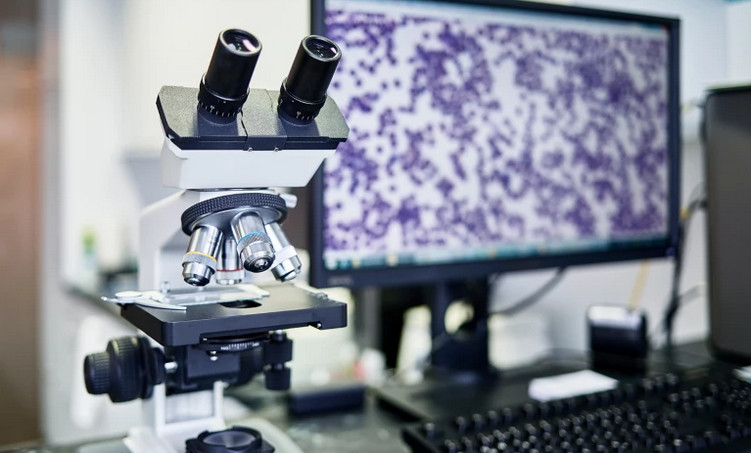
The increasing digitization of microscope slides is making pathology more amenable to advances in AI.

If you’ve ever had a biopsy, you — or at least, your excised tissues — have been seen by a pathologist. “Pathology is the cornerstone of diagnosis, especially when it comes to cancer,” says Bo Wang, a computer scientist at the University of Toronto in Canada.

But pathologists are increasingly under strain. Globally, demand is outstripping sup- ply, and many countries are facing shortages. At the same time, pathologists’ jobs have become more demanding. They now involve not only more and more conventional tasks, such as sectioning and staining tissues, then viewing them under a microscope, but also tests that require extra tools and expertise, such as assays for genes and other molecular markers. For Wang and others, one solution to this growing problem could lie in artificial intelligence (AI).

AI tools can help pathologists in several ways: highlighting suspicious regions in the tissue, standardizing diagnoses and uncovering patterns invisible to the human eye, for instance. “They hold the potential to improve diagnostic accuracy, reproducibility and also efficiency,” Wang says, “while also enabling new research directions for mining large-scale pathological and molecular data.”

Over the past few decades, slides have increasingly been digitized, enabling pathologists to study samples on-screen rather than under a microscope — although many still prefer the microscope. The resulting images, which can encompass whole slides, have proved invaluable to computer scientists and biomedical engineers, who have used them to develop AI-based assistants. Moreover, the success of AI chatbots such as ChatGPT and DeepSeek has inspired researchers to apply similar techniques to pathology. “This is a very dynamic research area, with lots of new research coming up every day,” Wang says. “It’s very exciting.”

Scientists have designed AI models to perform tasks such as classifying illnesses, predicting treatment outcomes and identifying biological markers of disease. Some have even produced chatbots that can assist physicians and researchers seeking to decipher the data hidden in stained slices of tissue. Such models “can essentially mimic the entire pathology process”, from analysing slides and ordering tests to writing reports, says Faisal Mahmood, a computer scientist at Harvard Medical School in Boston, Massachusetts. “All of that is possible with technology today,” he says.

But some researchers are wary. They say that AI models have not yet been validated sufficiently — and that the opaque nature of some models poses challenges to deploying them in the clinic. “At the end of the day, when these tools go into the hospital, to the bedside of the patient, they need to provide reliable, accurate and robust results,” says Hamid Tizhoosh, a computer scientist at Mayo Clinic in Rochester, Minnesota. “We are still waiting for those.”

Building foundations

The earliest AI tools for pathology were designed to perform clearly defined tasks, such as detecting cancer in breast-tissue biopsy samples. But the advent of ‘foundation’ models — which can adapt to a broad range of applications that they haven’t been specifically trained for — has provided an alternative approach.

Among the best-known foundation models are the large language models that drive generative-AI tools such as ChatGPT. However, ChatGPT was trained on much of the text on the Internet, and pathologists have no com- parably vast resource with which to train their software. For Mahmood, a potential solution to this problem came in 2023, when researchers at tech giant Meta released DINOv2, a foundation model designed to perform visual tasks, such as image classification1 . The study describing DINOv2 provided an important insight, Mahmood says — namely, that the diversity of a training data set was more important than its size.

By applying this principle, Mahmood and his team launched, in March 2024, what they describe as a general-purpose model for pathology, named UNI. They gathered a data set of more than 100 million images from 100,000 slides representing both diseased and healthy organs and tissues. The researchers then used the data set to train a self-supervised learning algorithm — a machine-learning model that teaches itself to detect patterns in large data sets. The team reported that UNI could outperform existing state-of-the-art computation- al-pathology models on dozens of classification tasks, including detecting cancer metastases and identifying various tumour subtypes in the breast and brain. The current version, UNI, has an expanded training data set, which includes more than 200 million images and 350,000 slides.

A second foundation model designed by the team used the same philosophy regarding diverse data sets, but also included images from pathology slides and text obtained from PubMed and other medical databases. (Such models are called multimodal.)

Like UNI, the model — called CONCH (for Contrastive Learning from Captions for Histopathology) — could perform classification tasks, such as cancer subtyping, better than could other models, the researchers found. For example, it could distinguish between subtypes of cancer that contain mutations in the BRCA genes with more than 90% accuracy, whereas other models performed, for the most part, no better than would be expected by chance. It could also classify and caption images, retrieving text in response to image queries and vice versa, to produce graphics of the patterns seen in specific cancers. However, it was not as accurate in these tasks as it was for classification. In head-to-head evaluations, CONCH consistently outperformed baseline approaches even in cases where very few data points were available for downstream model training.

UNI and CONCH are publicly available on the model-sharing platform Hugging Face. Researchers have used them for a variety of applications, including grading and subtyping neural tumours called neuroblastomas, predicting treatment outcomes and identifying gene-expression biomarkers associated with specific diseases. With more than 1.5 million downloads and hundreds of citations, the models have “been used in ways that I never thought people would be using them for”, Mahmood says. “I had no idea that so many people were interested in computational pathology.”

Other groups have developed their own foundation models for pathology. Microsoft’s GigaPath, for instance, is trained on more than 170,000 slides obtained from 28 US cancer centres to do tasks such as cancer subtyping. mSTAR (for Multimodal Self-taught Pretraining), designed by computer scientist Hao Chen at the Hong Kong University of Science and Technology and his team, folds together gene-expression profiles, images and text. Also available on Hugging Face, mSTAR was designed to detect metastases, to subtype cancers and to perform other tasks.

Now, Mahmood and Chen’s teams have built ‘copilots’ based on their models. In June 2024, Mahmood’s team released PathChat — a generalist AI assistant that combined UNI with a large language model. The resulting model was then fine-tuned with almost one million questions and answers using information derived from articles on PubMed, case reports and other sources. Pathologists can use it to have ‘conversations’ about uploaded images and generate reports, among other things. Licensed to Modella AI, a biomedical firm in Boston, Massachusetts, the chatbot received breakthrough-device designation from the US Food and Drug Administration earlier this year.

Similarly, Chen’s team has developed SmartPath, a chatbot that Chen says is being tested in hospitals in China. Pathologists are going head to head with the tool in assessments of breast, lung and colon cancers.

Beyond classification tasks, both PathChat and SmartPath have been endowed with agent like capabilities — the ability to plan, make decisions and act autonomously. According to Mahmood, this enables PathChat to streamline a pathologist’s workflow — for example, by highlighting cases that are likely to be positive for a given disease, ordering further tests to support the diagnostic process and writing pathology reports.

Foundation models, says Jakob Kather, an oncologist at the Technical University of Dresden in Germany, represent “a really transformative technological advancement” in pathology — although they are yet to be approved by regulatory authorities. “I think it’ll take about two or three years until these tools are widely available, clinical proven products,” he says.

An AI revolution?

Not everyone is convinced that foundation models will bring about groundbreaking changes in medicine — at least, not in the short term.

One key concern is accuracy. Specifically, how to quantify it, says Anant Madabhushi, a biomedical engineer at Emory University in Atlanta, Georgia. Owing to a relative lack of data, most pathology-AI studies use a cross-validation approach, in which one chunk of a data set is reserved for training and another for testing. This can lead to issues such as overfitting, meaning that an algorithm performs well on data similar to the information that the model has encountered before but does poorly on disparate data.

“The problem with cross-validation is that it tends to provide fairly optimistic results,” Madabhushi explains. “The cleanest and best way to validate these models is through external, independent validation, where the external test set is separate and distinct from the training set and ideally from a separate institution.”

Furthermore, models also might not per- form as well in the field as their developers suggest they do. In a study published in February, Tizhoosh and his colleagues put a handful of pathology foundation models to the test, including UNI and GigaPath. Using a zero-shot approach, in which a model is tested on a data set it hasn’t yet encountered (in this case, data from the Cancer Genome Atlas, which contains around 11,000 slides from more than 9,000 individuals), the team found that the assessed models were, on average, less accurate at identifying cancers than a coin toss would be — although some models did perform better for specific organs, such as the kidneys.

According to Tizhoosh, the discrepancy between published performance and what his team observed could come down to “fine-tuning”. Researchers typically tweak models before use by providing numerous examples related to their specific question, but Tizhoosh’s team used the models as is. Still, these findings suggest that AI-based pathology tools might not be as revolutionary as their designers state, he says. “I’m worried that they are overpromising, and that this will create a new wave of disappointment in AI.”

Several groups have launched efforts to standardize validation and benchmarking processes. For example, Tizhoosh, along with colleagues at the Memorial Sloan Kettering Cancer Center in New York City and the University of Texas MD Anderson Cancer Center in Houston, is preparing a challenge in which participants will be given 150 million images on which to train their models. They will then submit the models for independent testing. “We are hoping that from that undertaking, which will be closed by the end of the year, a set of rules and guidelines could emerge,” Tizhoosh says.

Another group, led by computer scientist Francesco Ciompi at the Radboud University Medical Center in Nijmegen, the Netherlands, has also launched several such challenges.

One, called UNICORN (Unified Benchmark for Imaging in Computational Pathology, Radiology and Natural Language) will test multimodal foundation models on 20 pathology-related tasks, including scoring biopsies, identifying regions of interest and classifying diseases. “The goal is to see how well these foundation models do without much fine-tuning,” Ciompi says.

No simple task

Even those enthusiastic about foundation models acknowledge that validation is no simple task. The models are designed to be open ended and adaptable. The “most conservative” way to assess them, says Kather, is to test every application. “So, if you have 1,000 different use cases, you have to collect hundreds of tissue slides for every single one of these use cases and apply your model to that.”

Kather says that there are ongoing discussions around radically different approaches for measuring performance. For instance, he suggests, as AI models become more human like in their abilities, perhaps they should be tested the same way people are. “You don’t evaluate a human in every single use case, you evaluate their general understanding of things — you pick some examples and evaluate their performance.”

There are other issues, too, including generalizability: making sure that these tools work across a diverse range of people. In 2021, for instance, Oncotype DX, a molecular test that assesses whether people with breast cancer could benefit from chemotherapy, came under fire. Researchers found that, despite having been on the market for at least two decades, the test was much less effective for Black women than for white women. “If you’re not intentional about how you’re developing and also validating these algorithms, you’re going to run into these catastrophic errors,” Madabhushi says.

There’s also the problem of hallucination, in which chatbots fabricate responses to queries. In medicine, an incorrect answer could lead to a wrong or missed diagnosis. “How do you measure the safety and the interpretability of these models to alleviate risks when it comes to patient diagnosis?” Wang says. “Regulators like the FDA simply do not have any guidelines for generative models in the health-care space.”

And then there’s the fact that foundation models are effectively black boxes, meaning that it can be difficult to work out how they arrived at their answers. “Foundation models are exciting, but we still lack an understanding of what these models are picking up,” says Madabhushi.

Madabhushi works on what he calls “explainable AI” — models based on conventional techniques in which researchers program algorithms to pinpoint specific biological features associated with diseases. For example, his team has developed models that search for specific patterns of collagen fibres that identify early-stage breast cancer and arrangements of immune cells that predict outcomes in individuals with cancer who receive immunotherapy. (Madabhushi co-founded Picture Health, a biotechnology company in Cleveland, Ohio, that has licensed these technologies and is working towards regulatory approval.)

Other researchers are working on opening the models’ black boxes — at least to some extent. Chen, for one, says that he and his team are working on ways to trace the steps their models take to get to the answers, in hopes of shedding light on how these algorithms make the decisions they do. “We want our models to be accurate and trustworthy,” Chen says. “And for doctors, one of the most important things is explainability.”

The field has a long way to go, but Chen is optimistic. “This is just the beginning,” he says. “Some people may overestimate the power of this technology — but it can also easily be underestimated in the long term.”