When Martin Luther sparked the spiritual and social revolution in Europe we now know as the Reformation, he sent an arrow deep into the heart of the Vatican power base. As the Reformation spread and enlightenment became commonplace, the Dark Ages ended, didn't they? Apparently they did not. The Vatican, in its lust for power over all human life, soon spawned an advocate who was worthy of the devil himself. He went by the name of Ignatius Loyola. Loyola was a self-made man. He suffered many trials and defeats in his life, but persevered to become the head of what he named the "Society of Jesus" whose members later became better known under their assigned nickname: the Jesuits.
Ignatius Loyola formed the Jesuits as a military order with the stated purpose of overthrowing the reformation started by Martin Luther and restoring the temporal (political) and religious domination of the Vatican in all walks of life. In other words, he wanted to bring back the Dark Ages. The domination of the Vatican and the Pope as Monarch over all Kings, Queens, secular leaders and the rest of humanity was (and still is) the avowed mission of the Society of Jesus.
Loyola's mandate was that the end justified the means, and any means of restoring Vatican domination was acceptable. The mission of the Jesuits was the extermination of all heresy and all heretics. Protestants and all other non-Catholics must be converted or eliminated - either sooner or later. The saying among the Jesuits was that "It is no sin to kill a heretic". This murderous justification apparently became their creed.
They demanded absolute, unquestioning obedience from their members. To achieve the fourth and highest vow of initiation, and thereby be initiated into the actively evil pyramidal top level, a Jesuit must be a loyal member for 35 years. This requirement ensured the smallest possibility of dissent or original thinking ever surviving in anyone reaching leadership role, or from ever altering their stated purpose or mission as set out by founder Ignatius Loyola.
As a military order, they fought many open political wars with European Kings, Queens and statesmen. Their favored tool against such power was assassination. Because of their small numbers, they became experts on poisoning and all known methods of assassination. They were even connected to the Borgias, as in Lucretia Borgia.
In those days most everyone had a confessor. The Jesuits deliberately sought these roles and came to dominate the confessor positions in European society. In that role they were able to use the intelligence they gathered from their political, social and business victims to gain advantage in politics, business and education. The confessor spies then used that information and position coupled with blackmail, bribery and intimidation to seek advantage for the Vatican in every endeavor. The Jesuit intelligence apparatus is unequaled on this planet. They were in place before we ever even dreamed of such an enterprise. Their missionaries carried this intelligence gathering on throughout the world when Columbus opened up the frontier, and no one has ever outdone them. This is one of the secrets of the Jesuit-Vatican control of much of the world.
The other very successful and crucial tactic they employed was to infiltrate all of their enemies. Opposing religions, enemy political structures, business, media and education, both domestic and foreign, were infiltrated by Jesuit missionaries and the many unidentifiable junior Jesuits: those secular followers who were all too willing to accept Jesuit favors and position in exchange for selling their countries and their souls to the Vatican.
What happened in Europe was that after 250 hundred years of bloody Jesuit-instigated massacres of Protestants, the bloody Jesuit Inquisitions (some estimates put the total Vatican and Jesuit death toll at 60 million human beings, making Hitler seem like an amateur) and resulting wars with European monarchs and statesmen, the Jesuits had been taking quite a beating themselves. Many had been executed outright, and as a group they were thrown out of almost every country in Europe at one time or another. Even several popes turned against them due to public outcries from some still loyal Catholic countries. But they always somehow managed to regroup and return. When they did, they always extracted bloody revenge on whatever country or ruler had expelled them. They killed the popes who banished them and took over the Vatican completely in the 1700's. This would prevent any further rear-guard actions against them in the future as they had suffered previously. This consolidation of Jesuit control over the Vatican itself marked a new phase in the ongoing battle against Protestantism and all the other non-Catholic "heretics" of the world at large.
The lessons learned from open conflicts with the European powers led to the next and most sinister phase of the Jesuit takeover of world society. They realized that the most effective and efficient method of seizing control of a society was by their already useful tactic of infiltration, but this time in secret. The instruments of that infiltration would be the many secret societies which they targeted and assumed control of. The international nature of the Masonic brotherhood made them an ideal tool for using its membership to advance Jesuit goals. Publicly, the Vatican and the Masons were enemies; but F. Tupper Saussy found evidence linking them, and Jon Eric Phelps notes that Adam Wieshaupt, the founder of modern Bavarian Freemasonry was a Jesuit agent.
The Knights of Malta (formerly Knights Templar) are the premiere secret society of the Vatican these days, but they are subservient to the Jesuit General. Many of America and the Western World's power elite are Knights of Malta.
Once they spread their influence through the secret societies worldwide and coordinated with the English Roundtables to impose a worldwide network of control, the whole phenomena evolved into what we know of today as the New World Order (or what the elite-controlled press so disingenuously refers to as Globalism, as if that is something to be desired). The Globalists have many nicknames, but their agenda is one and the same. It is total control of this planet. They have many factions who compete with one another for position and advantage like a group of churlish relatives, but the ultimate goal is always unchanged. And the Jesuit overlords lurk in the background, pulling all the important strings.
If you know anything about the history of the elite Brotherhood, then you will know that the Rothschild’s banking faction developed the art of financing wars from both sides of a conflict by utilizing the secrets of Central Banking with their ability to create enormous debt loads in the resident populations resulting from the issuance of government authorized fiat money. The incredible profits generated by war, reaped from both the winners and losers, led to a syndrome where induced wars became a way of life for the overlords because of the vast financial profits and additional benefits derived from it.
In addition to massive financial profits, war results in many other '"benefits" for the overlords. Some of the most important to them are increased centralized control of the population by government, increased militarization, and the public fear of conflicts to come, leading them to let their "peace-loving" statesmen do all their thinking for them.
But the Jesuits have a much darker rationale behind all the world conflicts they have overseen in the last 600 years. They have used all of these various wars as cover-ups for their mass exterminations of Protestants and all other non-Catholic peoples worldwide. This is the real horror of the Jesuits and the Vatican. They are the most prolific mass murders in all of human history. No one and nothing else in known human history compares to their record of calculated genocide. Now you know why we must stop this evil. The Vatican, as it is now, is the incarnation of hell itself. There can be no doubt of that.
Here are some Jesuit/Vatican atrocities to mull over.
The Crusades: Who knows how many died? And then the children’s crusades ... Good God.
The Inquisitions: In “Vatican Assassins,” Eric Jon Phelps cites a source that estimates roughly 60 million people were murdered in the various stages of the Inquisitions. Think about that number for a minute. Most of these people were tortured to death.
Catherine De Medici instigated the butchering of 75,000 French Protestant Huguenots on August 24, 1572. In 1598 Henry IV issued the Edict of Nates to protect them. By manipulating the rescinding of the protective Edict of Nantes in 1685 by the Jesuit confessor to King Louis XIV (using religious blackmail), another HALF MILLION FRENCH HUGUENOTS were butchered by the vile French Catholic Dragonades. In 1655 again, British Protestant hero Oliver Cromwell threatened to invade France and crush the French Crown for a new massacre being waged upon the French Vadois Protestants of valley of Piedmont by six Catholic Regiments by the Duke of Savoy.
The massacre of the poor Irish protestants on October 23rd 1641 - the "Feast" of Ignatius Loyola. How fitting a day for a massacre by these bloodthirsty swine. It is estimated that 150,000 Irish Protestants were butchered in the streets and in their homes. This slaughter took place over an eight-year period. Finally, once again it was Oliver Cromwell who finally invaded Ireland and attacked the Jesuit base at Drogheda and in a rage exterminated the entire Catholic village of 2000. Only this invasion finally ended the massacre of the Protestants. The present day Irish Protestants are still at war with the fanatical Irish Catholic Jesuits, and this is why they need the continued protection of the British Army.

Project N.O.L.A. National Crime Camera Program
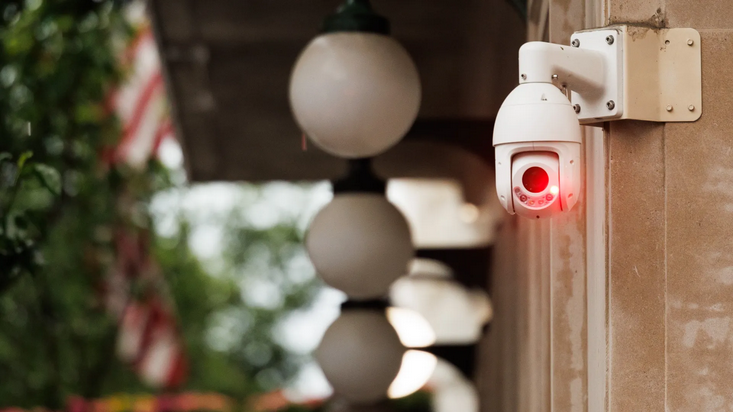
Located on the campus of the University of New Orleans, Project NOLA is a 501(c)(3) nonprofit organization that operates the largest, most cost efficient and successful networked HD crime camera program in America, which was created in 2009 by criminologist Bryan Lagarde to help reduce crime by dramatically increasing police efficiency and citizen awareness. A first of a kind Community-based crime camera initiative, Project NOLA provides HD crime cameras to residents, business owners, developers, associations and municipalities, which are most often placed on private property facing a street or park. Via the Internet, cameras transmit video to the Project NOLA Real-Time Crime Information Center at UNO, where video may be live-monitored, stored and re-broadcast to local law enforcement. Those hosting a Project NOLA crime camera may also view live and recorded video via a smart device, phone or pc. For privacy purposes, Project NOLA only maintains camera video for about 10 days and only provides camera footage to law enforcement.
Communities that host Project NOLA Crime Cameras often see a reduction in crime. When felony crimes do occur, criminals are more likely to be arrested quicker, confess and implicate others, and plead guilty, saving hundreds of investigative/prosecutorial/defense man-hours and millions in tax dollars. Witnesses and victims are less likely to relive tragic memories in court. At-risk juveniles are more likely to be identified and helped. Violent offenders transition more quickly into the state penal system.
Serving dozens of law enforcement agencies across America, we wish to bring the unprecedented success of our nonprofit program to other communities and highly encourage those wishing to learn more to call us at (504) 736-9187. A nonprofit with a highly proven track record of success, Project NOLA may immediately implement a highly successful crime camera system virtually anywhere for a small fraction of what other solutions commonly cost.
New Orleans police paused its use of a privately run facial recognition camera network last month amid legal and privacy questions from The Washington Post.
Why it matters: It's likely the first AI-enhanced live surveillance system to be used in a major American city, the paper says of the investigation.
The big picture: New Orleans police have been using information from Project NOLA's 200-plus camera network to find wanted individuals for at least the past two years, Douglas MacMillan and Aaron Schaffer wrote in the story.
Project NOLA's facial recognition cameras monitor the streets and send alerts to officers' phones in real time through an app when the system finds a possible match.
Project NOLA, a privately run nonprofit, puts in the details about who to look for based on press releases and social media alerts from NOPD and other agencies, Project NOLA founder Bryan Lagarde tells Axios.
Case in point: NOPD Superintendent Anne Kirkpatrick said the department used the facial recognition technology Friday to identify one of the 10 inmates who escaped from Orleans Justice Center earlier that day.
"This is the exact reason why facial recognition technology is so critical," Kirkpatrick said.
Project NOLA in a post said Louisiana State Police sent the escapees' information at 10:35am Friday. The cameras found two of the escapees less than 10 minutes later in the French Quarter and pinged authorities, leading to the arrest of one.
The group later released the video footage of the two escapees.
Image shows people riding bikes in the dark.
Between the lines: Project NOLA doesn't have a formal contract with the city, Lagarde tells Axios. Individual officers download the app and sign up for alerts, he says.
NOPD officers are "regrettably" no longer participating in the alerts, he told Axios on Monday. However, he said alerts are still going to LSP and federal agencies.
Flashback: A 2022 City Council ordinance regulates how the city uses facial recognition software, according to reporting by The Lens.
Before then, it wasn't allowed, but police had been using it for years, according to The Lens.
Mayor LaToya Cantrell requested to reverse the ban, The Lens said.
The other side: The ACLU of Louisiana blasted the technology in 2022 and again this week.
"This is the first known time an American police department has relied on live facial recognition technology cameras at scale, and is a radical and dangerous escalation of the power to surveil people as we go about our daily lives," ACLU said in a statement.
The organization called on the City Council to launch an investigation into NOPD's use of the system.
What's next: Kirkpatrick told the Washington Post the department is doing a formal review of how many officers used the alerts, what arrests were made and whether this violated the ordinance.
She also said she's in favor of the city running its own live facial recognition program.
Following records requests from The Post, officials paused the first known, widespread live facial recognition program used by police in the United States.
For two years, New Orleans police secretly relied on facial recognition technology to scan city streets in search of suspects, a surveillance method without a known precedent in any major American city that may violate municipal guardrails around use of the technology, an investigation by The Washington Post has found.
Police increasingly use facial recognition software to identify unknown culprits from still images, usually taken by surveillance cameras at or near the scene of a crime. New Orleans police took this technology a step further, utilizing a private network of more than 200 facial recognition cameras to watch over the streets, constantly monitoring for wanted suspects and automatically pinging officers’ mobile phones through an app to convey the names and current locations of possible matches.
This appears out of step with a 2022 city council ordinance, which limited police to using facial recognition only for searches of specific suspects in their investigations of violent crimes and never as a more generalized “surveillance tool” for tracking people in public places. Each time police want to scan a face, the ordinance requires them to send a still image to trained examiners at a state facility and later provide details about these scans in reports to the city council — guardrails meant to protect the public’s privacy and prevent software errors from leading to wrongful arrests.
Since early 2023, the network of facial recognition cameras has played a role in dozens of arrests, including at least four people who were only charged with nonviolent crimes, according to police reports, court records and social media posts by Project NOLA, a crime prevention nonprofit company that buys and manages many of the cameras. Officers did not disclose their reliance on facial recognition matches in police reports for most of the arrests for which the police provided detailed records, and none of the cases were included in the department’s mandatory reports to the city council on its use of the technology. Project NOLA has no formal contract with the city, but has been working directly with police officers.
“This is the facial recognition technology nightmare scenario that we have been worried about,” said Nathan Freed Wessler, a deputy director with the ACLU’s Speech, Privacy, and Technology Project, who has closely tracked the use of AI technologies by police. “This is the government giving itself the power to track anyone — for that matter, everyone — as we go about our lives walking around in public.”
Anne Kirkpatrick, who heads the New Orleans Police Department, paused the program in early April, she said in an interview, after a captain identified the alerts as a potential problem during a review. In an April 8 email reviewed by The Post, Kirkpatrick told Project NOLA that the automated alerts must be turned off until she is “sure that the use of the app meets all the requirements of the law and policies.” The Post began requesting public records about the alerts in February.
The police department “does not own, rely on, manage, or condone the use by members of the department of any artificial intelligence systems associated with the vast network of Project Nola crime cameras,” Reese Harper, a spokesman for the agency, said in an emailed statement.
Police across the country rely on facial recognition software, which uses artificial intelligence to quickly map the physical features of a face in one image and compare it to the faces in huge databases of images — usually drawn from mug shots, driver’s licenses or photos on social media — looking for possible matches. New Orleans’s use of automated facial recognition has not been previously reported and is the first known widespread effort by police in a major U.S. city to use AI to identify people in live camera feeds for the purpose of making immediate arrests, Wessler said.
The Post has reported that some police agencies use AI-powered facial recognition software in violation of local laws, discarding traditional investigative standards and putting innocent people at risk. Police at times arrested suspects based on AI matches without independent evidence connecting them to the crime, raising the chances of a false arrest. Often, police failed to inform defendants about their use of facial recognition software, denying them the opportunity to contest the results of a technology that has been shown to be less reliable for people of color, women and older people.
One of the few places where live facial recognition is known to be in wide use is London, where police park vans outside of high-traffic areas and use facial recognition-equipped cameras to scan the faces of passersby, and confront people deemed a match to those on a watch list. While the city says the program has never led to a false arrest since launching in 2016, Big Brother Watch, a London-based civil liberties group, argues that the practice treats everyone as a potential suspect, putting the onus on the people who were falsely matched to prove their innocence.
Real-time alerts
The surveillance program in New Orleans relied on Project NOLA, a private group run by a former police officer who assembled a network of cameras outside of businesses in crime-heavy areas including the city’s French Quarter district.
Project NOLA configured the cameras to search for people on a list of wanted suspects. When the software determined it had found a match, it sent real-time alerts via an app some officers installed on their mobile phones. The officers would then quickly research the subject, go to the location and attempt to make arrests.
Police did not set up the program nor can they directly search for specific people, or add or remove people from the camera system’s watch list, according to Bryan Lagarde, Project NOLA’s founder.
Little about this arrangement resembles the process described in the city council ordinance from three years ago, which imagined detectives using facial recognition software only as part of methodical investigations with careful oversight. Each time police want to scan a face, the ordinance requires them to send a still image to a state-run “fusion center” in Baton Rouge, where various law enforcement agencies collaborate on investigations. There, examiners trained in identifying faces use AI software to compare the image with a database of photos and only return a “match” if at least two examiners agree.
Investigators have complained that process takes too long and often doesn’t result in any matches, according to a federally mandated audit of the department in 2023. It has only proved useful in a single case that led to an arrest since October 2022, according to records police provided to the city council.
By contrast, Project NOLA claims its facial recognition cameras played a role in at least 34 arrests since they were activated in early 2023, according to the group’s Facebook posts — a number that cannot be verified because the city does not track such data and the nonprofit does not publish a full accounting of its cases. Without a list of the cases, it’s impossible to know whether any of the people were misidentified or what additional steps the officers took to confirm their involvement in the crimes.
Kirkpatrick said her agency has launched a formal review into how many officers used the real-time alerts, how many people were arrested as a result, how often the matches appear to have been wrong and whether these uses violated the city ordinance.
“We’re going to do what the ordinance says and the policies say, and if we find that we’re outside of those things, we’re going to stop it, correct it and get within the boundaries of the ordinance,” she said.
There are no federal regulations around the use of AI by local law enforcement. Four states — Maryland, Montana, Vermont and Virginia — as well as at least 19 cities in nine other states explicitly bar their own police from using facial recognition for live, automated or real-time identification or tracking, according to the Security Industry Association, a trade group.
Lawmakers in these places cited concerns in public meetings that the technology could infringe on people’s constitutional rights or lead police to make mistakes when they rush to arrest a potential suspect before taking steps to confirm their connection to the crime, as many people look alike. At least eight Americans have been wrongfully arrested due to facial recognition, The Post and others have reported.
The unsanctioned surveillance program in New Orleans highlights the challenge of regulating a technology that is widely available, at a time when some police see AI as an invaluable crime fighting tool. Even in some places where officials have banned facial recognition, including Austin and San Francisco, officers skirted the bans by covertly asking officers from neighboring towns to run AI searches on their behalf, The Post reported last year.
Violent crime rates in New Orleans, like much of the country, are at historic lows, according to Jeff Asher, a consultant who tracks crime statistics in the region. But city officials have seized on recent instances of violent crime to argue that police need the most powerful tools at their disposal.
Last month, an independent report commissioned after the New Year’s Day attack that left 14 people dead on Bourbon Street found the New Orleans police to be understaffed and underprepared. The report, overseen by former New York City police commissioner William Bratton, advised New Orleans to explore adopting several new tools, including drones, threat prediction systems and upgrades to the city’s real-time crime center — but did not recommend adding any form of facial recognition.
Kirkpatrick, the city’s top police official, and Jason Williams, its top prosecutor, both said they are in discussions with the city council to revise the facial recognition ordinance. Kirkpatrick says she supports the idea of the city legally operating its own live facial recognition program, without the involvement of Project NOLA and with certain boundaries, such as prohibiting use of the technology to identify people at a protest.
“Can you have the technology without violating and surveilling?” she asked. “Yes, you can. And that’s what we’re advocating for.”
5,000 cameras
Few people have as much visibility into the everyday lives of New Orleans residents as Lagarde, a former patrol officer and investigator who started his own video surveillance business in the late 1990s before launching Project NOLA in 2009.
Funded by donations and reliant on businesses that agree to host the cameras on their buildings or connect existing surveillance cameras to its centralized network, Lagarde said Project NOLA has access to 5,000 crime cameras across New Orleans, most of which are not equipped with facial recognition. The cameras all feed into a single control room in a leased office space on the University of New Orleans campus, Lagarde said in an interview at the facility. Some camera feeds are also monitored by federal, state and local law enforcement agencies, he said.
Project NOLA made $806,724 in revenue in 2023, tax filings show. Much of it came from “cloud fees” the group charges local governments outside of New Orleans — from Monticello, Florida, to Frederick, Colorado — which install Project NOLA cameras across their own towns and rely on Lagarde’s assistance monitoring crime. He’s experimented with facial recognition in Mississippi, he said, but his “first instance of doing citywide facial recognition is New Orleans.” New Orleans does not pay Project NOLA.
For more than a decade, Lagarde used standard cameras outside businesses to monitor crime and offer surveillance clips for officers to use in their investigations. Lagarde’s cameras became so widespread that police began calling him when they spotted a Project NOLA camera hovering near a crime scene they were investigating, according to police incident reports, interviews with police and emails obtained through a public records request.
Lagarde began adding facial recognition cameras to his network in early 2023, after an $87,000 bequest from a local woman. Lagarde used the money to buy a batch of cameras capable of detecting people from about 700 feet away and automatically matching them to the facial features, physical characteristics and even the clothing of people in a database of names and faces he has compiled.
Lagarde says he built his database partly from mug shots from local law enforcement agencies. It includes more than 30,000 “local suspected and known criminals,” Project NOLA wrote on Facebook in 2023. Lagarde can quickly identify anyone in the database the moment they step in front of a Project NOLA camera, he said. He can also enter a name or image to pull up all the video clips of that person Project NOLA captured within the last 30 days, after which Lagarde says videos get automatically deleted “for privacy reasons.”
Project NOLA found enthusiastic partners in local business owners, some of who were fed up with what they saw as the city’s inability to curb crime in the French Quarter — the engine of its tourism economy that’s also a hub for drug dealers and thieves who prey on tourists, said Tim Blake, the owner of Three Legged Dog, a bar that was one of the first places to host one of Project NOLA’s facial recognition cameras.
“Project NOLA would not exist if the government had done its job,” Blake said.
While Lagarde sometimes appears alongside city officials at news conferences announcing prominent arrests, he is not a New Orleans government employee or contractor. Therefore, Lagarde and the organization are not required to share information about facial recognition matches that could be critical evidence in the courtroom, said Danny Engelberg, the chief public defender for New Orleans.
“When you make this a private entity, all those guardrails that are supposed to be in place for law enforcement and prosecution are no longer there, and we don’t have the tools to do what we do, which is hold people accountable,” he said.
Lagarde says he tries to be transparent by posting about some of his successful matches on Facebook, though he acknowledges that he only posts a small fraction of them and says it would be “irresponsible” to post information about open investigations. Project NOLA, he added, is accountable to the businesses and private individuals who host the cameras and voluntarily opt to share their feeds with the network.
“It’s a system that can be turned off as easily as it’s been turned on,” he said. “Were we to ever violate public trust, people can individually turn these cameras off.”
Banned devices
Lagarde declined to say who makes the equipment he uses, saying he doesn’t want to endorse any company.
Several Project NOLA cameras in the French Quarter look nearly identical to ones on the website of Dahua, a Chinese camera maker, and product codes stamped on the backs of these devices correspond to an identical camera sold by Plainview, New York-based equipment retailer ENS Security, which has acknowledged reselling Dahua cameras in the past. Project NOLA’s website also contains a link to download an app where police officers can view and manage footage. The app, called DSS, is made by Dahua.
Congress banned federal agencies from using products or services made by Dahua and a list of other Chinese companies in 2018, citing concerns that the equipment could be used by President Xi Jinping’s government to spy on Americans. Since 2020, the law has barred any agency or contractor that receives federal funds from using those funds on the banned products.
A Dahua spokesperson declined to comment on the New Orleans cameras and said the company stopped selling equipment in the U.S. last year.
The New Orleans Police Department has received tens of millions of dollars from the federal government in recent years and confirmed that some officers have installed this DSS app on mobile phones and police workstations. Kirkpatrick said she was not aware of who made the app or cameras but would look into it.
Lagarde said Project NOLA uses “American-made, brand-name servers to operate our camera program.”
Some city officials argue that police are not violating the city’s facial recognition ordinance because they do not own the cameras or contract with Lagarde; they are merely receiving tips from an outside group that is performing facial recognition scans on its own.
“If Bryan Lagarde calls an officer and says ‘I think a crime is occurring on the 1800 Block of Bienville,’ that’s no different than Miss Johnson looking out of her window and saying ‘I think a crime is occurring on 1850 Bienville,’” Williams, the Orleans Parish district attorney, said in an interview.
But in many cases, police have gone to Lagarde to request footage or help identifying and locating suspects, according to police reports, Project NOLA social media posts and internal police emails.
Tracking a suspect
In one case last year, a police detective investigating a snatched cellphone relied on Project NOLA to identify the perpetrator and track him down using facial recognition alerts, according to accounts of the investigation drawn partly from the police incident report and partly from Project NOLA’s Facebook post.
The detective contacted Lagarde “to assist locating the perpetrator on Project NOLA cameras,” according to the police report, providing still shots taken from the city’s surveillance camera footage. Lagarde used Project NOLA’s clothing recognition tool to find previous video footage of a suspect. With the new, better images of his face, Project NOLA used facial recognition to learn his possible identity and share that with the detective.
The detective took that name and found photos of a man on social media whose appearance and tattoos matched the phone-snatcher. Police got a warrant for his arrest. Lagarde added that name and face to Project NOLA’s watch list, and a few days later, cameras automatically identified him in the French Quarter and alerted police, who found and arrested him. The man was charged with robbery but pleaded guilty to the lesser offense of theft, court records show.
The police report mentioned that Lagarde helped identify the suspect, but did not mention that he used facial recognition to do so or used live facial recognition and automated alerts to monitor for and locate him.
David Barnes, a New Orleans police sergeant overseeing legal research and planning, said officers are trained to always find probable cause before making an arrest. He said Lagarde sometimes overstates in Facebook posts the role his technology played in some of the cases. He said the detective investigating the phone-snatching case was only asking Lagarde to find videos of the suspect, not the location of the suspect.
On a rainy May morning outside the Three Legged Dog, a Project NOLA camera swiveled about, blinking red and blue lights, and twitching side to side as it followed cars and people based on an automated program. The camera is no longer pinging the police on an app — at Kirkpatrick’s request.
“Like you and everybody else, I do not want to lose any cases of violent criminals based on policy violations or violations of our ordinances,” Kirkpatrick said in her email last month to Lagarde.
But the alerts still go to Project NOLA staff, who Lagarde said convey the location of wanted suspects to the police via phone calls, texts and emails.
New Orleans police have secretly been using facial recognition software to monitor citizens in an effort to identify crime suspects, according to a new report.
And while police across the country are increasingly using such technology, an investigation by The Washington Post has found that police in New Orleans have taken it a step further, potentially violating a city ordinance that was designed to prevent false arrests and safeguard their citizens' civil rights.
The cameras belong to Project NOLA, a nonprofit that operates a private network of more than 200 facial recognition cameras that scan the streets for wanted suspects and then automatically sends the information to cops’ phones through an app when a possible match for a suspect is detected, The Post reported.
Bryan Lagarde, a former cop who founded the surveillance video company, had previously said he wanted to help police more closely monitor the city's “crime-heavy areas.”
Police were only supposed to use the software to find “specific suspects in their investigations of violent crimes,” according to the city ordinance.
But The Post’s investigation found, according to court records, that these cameras “played a role in dozens of arrests,” but most uses were never disclosed in police reports and were “not included in the department’s mandatory reports to the city council.”
If an officer wants to scan a face, the ordinance requires police to send a still image to a state-run “fusion center” in Baton Rouge, where various law enforcement agencies collaborate on investigations, The Post reported.
Experts who are trained in identifying faces use AI software would compare the image with a database of photos and only if at least two examiners agree, they would return a “match” before cops approach suspects.
Nathan Freed Wessler, deputy director of the American Civil Liberties Union (ACLU) Speech, Privacy, and Technology Project, “this is the facial recognition technology nightmare scenario that we have been worried about,” he told The Post.
“This is the government giving itself the power to track anyone — for that matter, everyone — as we go about our lives walking around in public.”
The program was paused in April, according to New Orleans Police Department Superintendent Anne Kirkpatrick, who told The Post that she would be conducting a review and that all automated alerts would be turned off until she is “sure that the use of the app meets all the requirements of the law and policies.”
Project NOLA promoted its cameras for playing a role in the capture of one of 10 inmates who escaped from a Louisiana jail just last week.
But the ACLU is calling for the department to “halt the program indefinitely and terminate all use of live-feed facial recognition technology.”
“We cannot ignore the real possibility of this tool being weaponized against marginalized communities, especially immigrants, activists, and others whose only crime is speaking out or challenging government policies. These individuals could be added to Project NOLA's watchlist without the public’s knowledge, and with no accountability or transparency on the part of the police departments,” said Alanah Odoms, Executive Director of the ACLU of Louisiana.
“Facial recognition technology poses a direct threat to the fundamental rights of every individual and has no place in our cities. We call on the New Orleans Police Department and the City of New Orleans to halt this program indefinitely and terminate all use of live-feed facial recognition technology. The ACLU of Louisiana will continue to fight the expansion of facial recognition systems and remain vigilant in defending the privacy rights of all Louisiana residents.”
Also:
New Orleans may be first U.S. city to use live AI facial recognition camera network 
Also:
Police secretly monitored New Orleans with facial recognition cameras 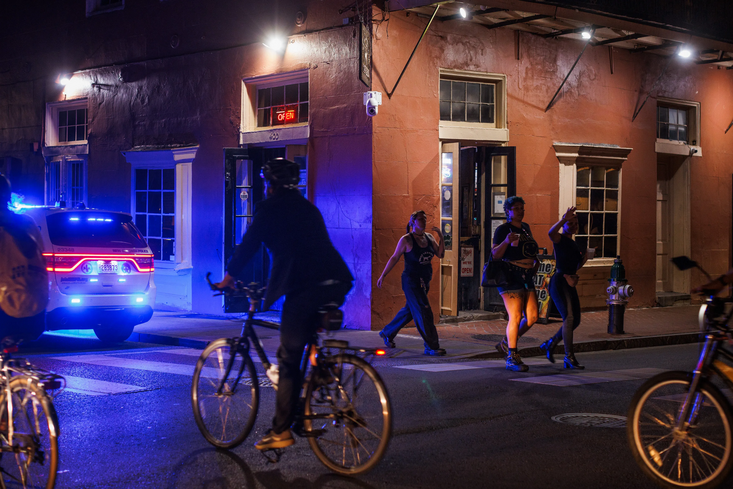
Also:
New Orleans used Minority Report-like facial recognition software to monitor citizens for crime suspects:
The World’s First Humanoid Robot Factory
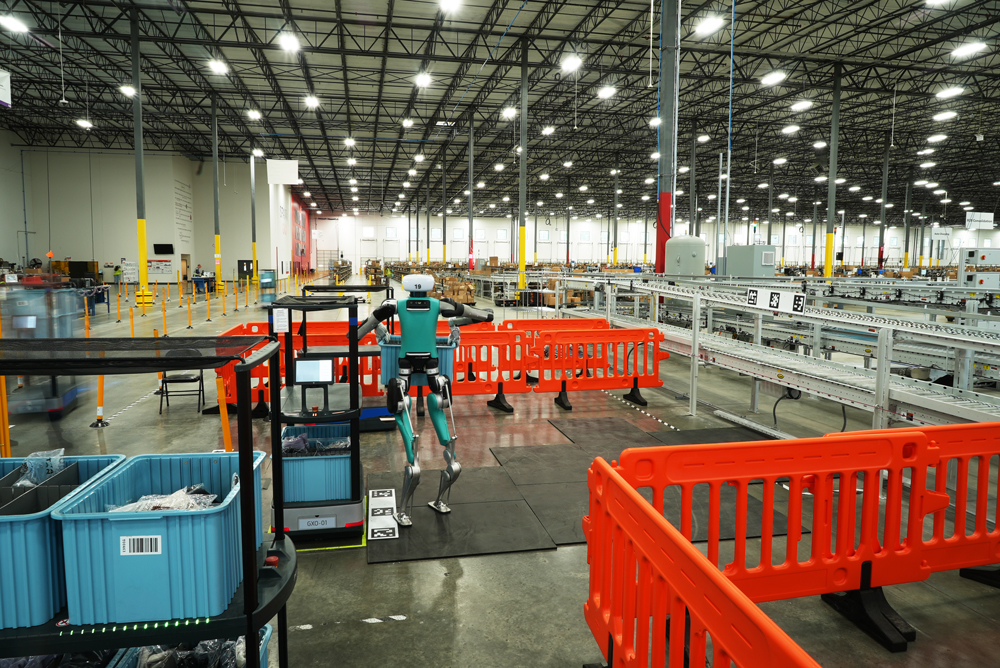
Oregon company Agility Robotics has completed the construction of the world’s first factory for human-centric, multi-purpose robots or humanoids.
The first humanoid robot factory.
RoboFab is the first full-scale humanoid robot factory in the world. It’s the home base for producing our robot Digit and the athat go with it. Located in Salem, Oregon, RoboFab is a shining example of American manufacturing excellence.
The New RoboFab Factory
Last year, Agility began construction of a 70,000-square-foot facility that will open this year. Now, the factory has officially begun assembling robots and robotic fleets. About 30 miles from Agility’s engineering center, the facility has the capacity to produce hundreds of robots within the first year.

More than 500 workers will be able to work the factory at full capacity, in addition to Agility’s other previously built locations. Agility’s new RoboFab facility will be able to produce over 10,000 robots annually.
Agility Robotics’ Digit
Agility Robotics began as an Oregon State University spin-out in 2015. The lab’s immediate push was to create a basis for locomotion and stability in bipedal robots. In 2017, the company unveiled a full-size robot known as Digit. About six years later, in 2023, the current model of the Digit was made available.
Designed from the ground up, Digit operates the same way people do, following assignments to do tasks such as bulk material handling. Digit provides a robotic utility to take the place of humans, taking care of assigned tasks both safely and efficiently.
Once the facility moves to full capacity, Digit will be of additional value, working in the same factory as its production. The bot will be able to load and unload totes moving alongside humans, replicating simple human-centric tasks.
The Agility Robot Manufacturing System
RoboFab is a CapEx light assembly facility. That means no heavy machinery or costly industrial equipment is used to produce the Digits that come off the assembly line. The facility itself, as well as the Agility Robot Manufacturing System (ARMS), is highly scalable to meet the immense commercial demand for Digit.
At peak capacity, RoboFab can produce 10,000 robots per year. However, we will ramp up to eight units per shift in the first year, which will allow us to refine the system while we avoid wasting time and resources. More importantly, we will produce a large number of robots right out of the gate.
The assembly line is divided into work cells for the major sub-assemblies, including legs, arms, torsos, and actuators. It is designed to produce each sub-assembly in roughly the same amount of time. Our unique system is tuned for an entire robot to come together simultaneously and then move on to final testing.
Each work cell can quickly expand or be duplicated to increase production capacity. It's a structure that allows for high-rate manufacturing and producing robots in large quantities without requiring expensive modifications to the process or shutting down the assembly line to make adjustments.
With ARMS, we have a blueprint for quickly and cost-effectively building more RoboFabs as needed.
Are these tasks being done in your facility?
If so, it's time to bring Digit in to help expand your labor pool.
Tote Load & Unload:
Digit is a revolutionary piece of automation technology, the ultimate connector of existing technology and infrastructure. Digit can load and unload totes to support many different workflows.
For example, we've successfully integrated with many of the world's biggest AMR vendors, and the list is growing.
Using a mobile manipulator like Digit minimizes downtime and maximizes throughput, enhancing overall productivity. Load and unload totes from just about any source or destination: AMRs, Racks & Shelves, Units Sorters, Goods 2 Person Systems, Conveyors
Tote Recycling:
By efficiently managing the recycling of totes used for material transportation within logistics and manufacturing workflows, companies can optimize resources and re-task employees where they make the most impact.
This process minimizes downtime and enhances efficiency by ensuring totes are readily available, and at the right locations.
Tote Stacking, Tote Destacking, Tote Nesting
Tote Palletizing & Depalletizing:
By efficiently managing the recycling of totes used for material transportation within logistics and manufacturing workflows, companies can optimize resources and re-task employees where they make the most impact.
This process minimizes downtime and enhances efficiency by ensuring totes are readily available, and at the right locations.
Palletize and Depalletize from/to: Conveyors, Racks, Carts, AMRs
"World's first humanoid robot factory" will ship Digits in 2024
Agility Robotics is well into construction of a 70,000-sq-ft (6,503-sq-m) facility in Salem, Oregon, with the capacity to produce more than 10,000 units per year of the company's Digit humanoid robot – which will work alongside humans on the factory floor.
The new "RoboFab" manufacturing plant is set to open later this year, with customer deliveries expected to begin in 2024, and "general market availability" to commence in 2025. Agility expects to build "hundreds" of Digit humanoids in its first year, and scale up from there.
In the video below, Agility COO Aindrea Campbell compares the RoboFab factory to Henry Ford's first manufacturing operation.
"There was a point in time over a hundred years ago," she says, "when we had the world's first automobile factory. I think this is the same moment where we're now having the world's first humanoid robot factory, and someday, just like automobiles, humanoid robots will be all around the globe."
So what is Digit? Well, it's a 175-cm-tall (5-ft 9-in) tall bipedal robot weighing around 65 kg (141 lb). It can carry loads up to 16 kg (35 lb) in a pair of claw-like gripper hands, and it charges itself autonomously to theoretically stay on duty for 16 hours out of 24 – the equivalent of covering two full-time shifts.
It runs a similar set of bird-like backwards-looking legs to the company's Cassie robot, which broke the Guinness World Record for the fastest 100-meter sprint by a bipedal robot in 2022. Both have short upper legs that typically stay oriented forward in a knees-up stance, then long "calves" extending back behind the torso, and a high ankle joint where you'd normally expect to see a knee, leading down to smallish toe pads in contact with the ground.
The advantages here are that Digit can fold its legs up behind it in a way that would cause loud noises from the average human. It can also squat down in front of shelves to grab boxes without its knees protruding forward, so it can pick them up with less of a need to lean forward.
Equipped with camera vision and LiDAR, Digit has been around for several years now – you may remember it being proposed as a parcel-delivering robot by Ford back in 2019 – which would be remarkable. Who remembers things from 2019?
It can be controlled via a gamepad-style tablet (and e-stop shutdown initiator) and hard-coded with various tasks – mainly in the 'picking things up and putting them down' category. Interestingly though, in the last few months, Agility has been experimenting with using large language model (LLM) AIs, effectively to get Digit to program itself in response to natural language verbal commands.
Digit will start out moving boxes and totes around Agility's own factory, and those of its early customers. Next, the company hopes to get it loading and unloading trucks. There's little mention of more complex tasks at this point, so it seems Agility is happy to keep early use cases very constrained.
As to whether RoboFab is technically the world's first humanoid robot factory, well, that may be gilding the lily, since Chinese company Fourier Intelligence announced in July that it would have 100 of its GT-1 humanoids built and in the hands of customers by the end of this year – each with the capability to carry nearly its own weight.
Either way, it adds to a growing pile of evidence that the workforce is about to see yet another substantial change. There are now dozens of companies who have decided, and convinced investors, that the dawn of humanoid robot workers is very nearly upon us. Brace for change.
Also:
Amazon says its new warehouse robot can work 20-hour shifts and 'feel' items
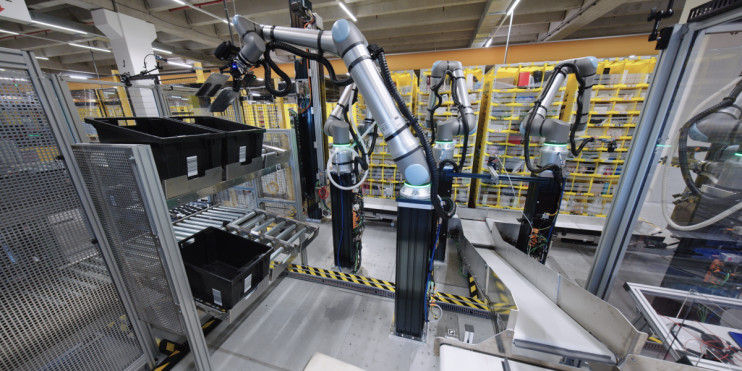
Amazon's latest Vulcan robot is the company's first system that can sense touch. The devices can reach places where workers would ordinarily have to bend or climb a step-ladder. Amazon says fulfillment centers will still need human workers, especially for higher-tech roles.
Amazon warehouse workers' newest high-tech colleague has a sensitive side.
The e-commerce giant's latest robot, named Vulcan, is its first system that can sense touch, enabling it to handle a wider selection of oddly shaped items than older models.
"In the past, when industrial robots have unexpected contact, they either emergency stop or smash through that contact," Amazon director of applied science Aaron Parness said in a statement.
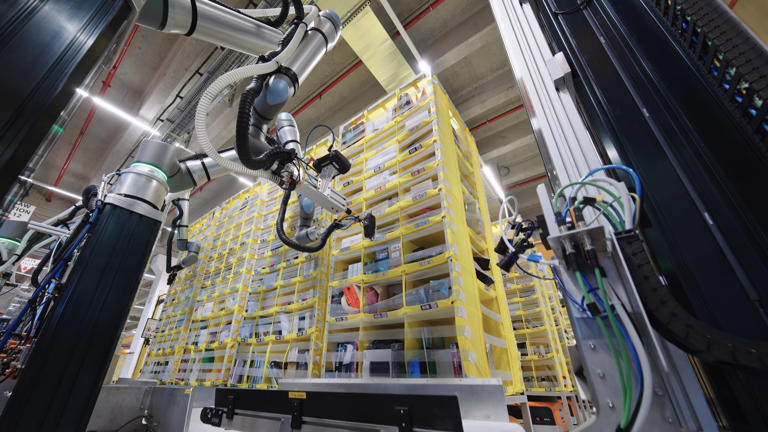
Vulcan's arm uses force-feedback sensors that allow the robot to detect how much pressure it can apply without damaging an object, and Amazon says the tech enables the robot to pick and stow three quarters of the kinds of products that are kept at a typical fulfillment center.
The tech is currently in use at centers in Spokane, Washington, and Hamburg, Germany. Amazon plans to deploy more units across the US and Europe aver the next few years.
Apart from its ability to work 20-hour shifts, Amazon also says the Vulcan robot complements human workers by helping reach items from high bins without a step-ladder, and low bins that would require crouching.
That frees up workers to focus their efforts on objects stored in mid-height bins, which the company calls their "power zone."
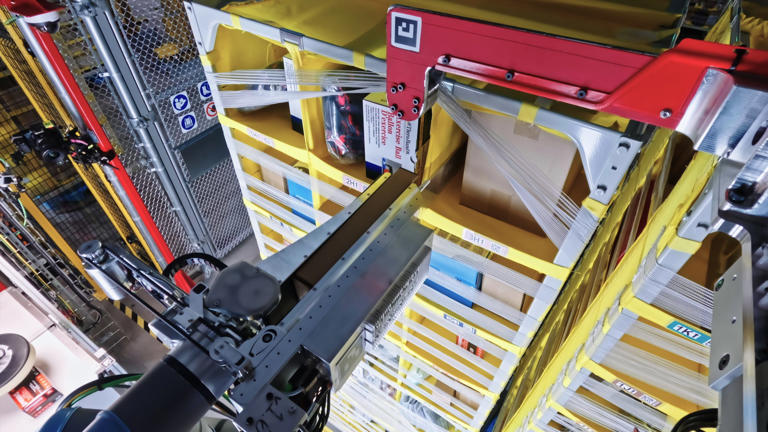
Vulcan works alongside our employees, and the combination is better than either on their own," Parness said.
Parness also told CNBC that Amazon fulfillment centers will still need human workers, especially for higher-tech roles that involve installing and maintaining the expanding robot fleet.
"I don't believe in 100% automation," he told the outlet. "If we had to get Vulcan to do 100% of the stows and picks, it would never happen. You would wait your entire life. Amazon understands this."
Satan—"God Of This World"

When did SATAN become 'The God Of This World'?
Think of this: Rev. 7, the 144,000 and the great innumerable multitude—especially the great innumerable multitude, from every nation, kindred, tongue and language.
Remember that at the beginning of the Tribulation, you have the three-angels' messages come first.
FEAR GOD
PREACHING THE GOSPEL
WARNING ABOUT THE MARK OF THE BEAST
When should you warn about the mark of the beast? Before it's implemented by force? or After it's implemented? Obviously, before!
The great innumerable multitude and the 144,000 of Rev. 7 are about two years into the last three and a half of the Tribulation. The Tribulation is seven years long, half peace, half the trauma and the Tribulation.
Let's get into the topic:
When did Satan become 'the god of this world'?
The question is asked supposing the context that there was a time he wasn't.
Yes, we'll find out that there was a time he wasn't!
Was it at the time of creation? Was it when Adam and Eve sinned against the Lord?…. …Was it at the crucifixion of the Messiah? Was it when Paul was alive? Could there be some other Biblical authority to tell us?
We will answer all of those by Scripture.
First of all the place to begin is in the beginning. A proper reading of the first verse is very important. Then we will get other Scriptures that will pinpoint for us when Satan rebelled and when he became 'god of this world.'
Those are two different events.
Genesis 1:1: "In the beginning God…"— That means God was there before anything else. How do we understand that? We don't, because that's at a level that God understands!
"…created the heavens…" (v 1)— That means there's an indeterminable period of when God created the heavens.
"…and the earth" (v 1). That came after creating the heavens!
The earth is considerably older than the 6,000 years that many of the Protestants like to claim, because they fail to put the Scriptures together to determine how old the earth is. You can't determine exactly how old the earth is.
Verse 2: "And the earth was… [or became] …without form and void, and darkness was upon the face of the deep…" There was already a flood by v 2!
How did that flood come about?
Did God create the earth in chaos and confusion and covered with the flood?
We will see here the flow of creation:
GOD
HEAVENS
EARTH
But between heavens being created and earth being created, we will see that the angels were created. So, you've got:
HEAVEN
ANGELS
EARTH
REBELLION
FIRST FLOOD
MAN
It doesn't give us any number of days, years, eons or anything like this. Let's see heavens being created, and think about this for just a minute: If God created everything 6,000 years ago and He lives forever, what was He doing up to time of 6,000 years ago? Nothing? We will see that the proposition of only a 6,000-year-old universe and earth is not true, and we will see why.
Job 38 will tell us some very important things. Remember when Job said, 'Oh, that the Lord would answer me.'
Job 38:1: "Then the LORD answered Job out of the whirlwind, and said, 'Who is this that darkens counsel by words without knowledge?'" (vs 1-2).
Note: It's hard for people to understand what Job's sin was. He was righteous, like he said. All of it was righteousness that came from God, which is true. But his sin was he took all credit for it rather than giving God the credit. That's a summary as to why none of his three friends were able to find out what it was that he did because he was righteous.
Verse 3: "Now gird up your loins like a man; for I will demand of you, and you shall answer Me. Where were you when I laid the foundations of the earth?.… [there was a time when God laid the foundations to create the earth] …Declare it if you have understanding! Who has determined its measurements if you know? Or who has stretched the line upon it? On what are the foundations fastened to? Or who laid its cornerstone, when the morning stars sang together and all the sons of God shouted for joy?" (vs 4-7).
Morning stars and sons of God are two classifications of angels. We will see before Satan sinned he was called the morning star.
What does this show at this point about the earth? All the angels were in agreement with what God did. They shouted for joy because that was to be their habitation. As we will see later, they left it! We will see why they left it.
We find that there was a time that the one (Satan) who was called 'the anointed cherub that covers,' and 'the morning star' (Isa. 14), that there was no sin.
What caused them to sin?
Where can we find it in the Bible?
It is there!
It's interesting that the phrase 'son of man' is used of Ezekiel almost exclusively all the way through Ezekiel.
Note: Jesus called himself the Son of man, especially when He was in Judea, because of all of the religious leaders there. There were a couple of times that He called Himself the Son of God. Then they came after Him with 'all barrels blazing' as it were.
Ezekiel 28:12: "Son of man, lift up a lamentation over the king of Tyre, and say to him, 'Thus says the Lord GOD, "You seal up the measure of perfection, full of wisdom and perfect in beauty. You have been in Eden the garden of God…"'" (vs 12-13).
Stop and think here! Who was in the Garden of Eden? Adam, Eve, the Lord and later Satan! After they sinned, only God was in the Garden of Eden and He put the cherubim with the swords to keep the way so they couldn't come to the Tree of Life or come into the Garden of Eden.
The Garden of Eden was destroyed at the Flood.
"…every precious stone was your covering… (v 14): You were the anointed cherub that covers, and I set you so; you were upon the Holy mountain of God… [that's where the throne of God is] …you have walked up and down in the midst of the stones of fire" (vs 13-14)—because it's all like sapphire stone and the fire is probably the reflection of the glory of God's creation.
Verse 15: "You were perfect in your ways from the day that you were created…" First of all God created the heavens, then the angels, then the earth!
"…until iniquity was found in you" (v 15). When was iniquity found in him?
This also shows that it was a choice. He chose to do so. When did that occur? Isn't it interesting that this question could not be possibly answered for nearly 4,000 years in the writings of the Bible? But here in the very last book, the book of Revelation, God gives us a vision of what happened and why Satan rebelled.
Remember that God said He laid the foundation of the earth and the 'morning stars and the sons of God sang for joy.'
Revelation 12:1: "Then there appeared a great wonder in heaven: a woman clothed with the sun, and having the moon under her feet, and on her head a crown of twelve stars."
Note: This woman represents in Rev. 12: Israel, and Mary, and because the woman had the man-Child who was to rule all nations, Christ.
Verse 2: "And being with child, she cried in travail, and was in pain to deliver. And another sign was seen in heaven: and behold, a great red dragon, having seven heads and ten horns, and seven crowns on his heads" (vs 2-3).
Verse 3: "And another sign was seen in heaven: and behold, a great red dragon, having seven heads and ten horns, and seven crowns on his heads; and his tail swept away a third of the stars of heaven, and cast them to the earth…." (vs 3-4).
This is the rebellion of Satan and one-third of the angels. This is when the rebellion took place; this is when, maybe not the thought of sin, but the action of rebellion against God by his thoughts of vanity and sin that he had there in Ezek. 28 were manifested.
Then it projects forward to the coming of the Messiah, which was first prophesied about to Adam and Eve right after they sinned. Satan wanted to kill the child (Matt. 3) with the three wise men and Herod, etc., but God intervened.
We will see all the way through that Satan wants to supplant God and Christ. Here is the rebellion that took place; this is when he sinned. Was it when he found that God had another plan before He created the angels, that He didn't tell them about until He laid the foundation of the earth? We have to put the Scriptures together to get the story flow. It's not all in one place.
"…in order that we might be Holy and blameless before Him in love" (v 4). We'll just short-circuit the rest of that: We would become the sons and daughters of God and be over the angels.
Didn't Paul say we will judge angels?
Doesn't the superior judge the inferior? Yes, indeed!
Is that when Satan rebelled?
When Satan found out the plan that God had and, instead of being the super-ruler that he thought he was, now he was going to be a servant to human beings, less than he was, and that they would have the privilege and destiny greater than his, as he was only a covering cherub, an angel. Human beings were destined to become after the God Family, after the God-kind.
You think about human situations. In human situations when someone finds out that this lowly person is going to be promoted over you, there would be rebellion. That's exactly what happened!
How long were the angels on the earth before the rebellion took place?
Before God revealed to the angels what His plans for human beings would be?
How that they would be made after the likeness and image of God and the angels weren't?
What happened?
Jude 6: "And the angels who did not keep their own original domain… [on the earth] …but deserted their habitation…" in rebellion against God to ascend to heaven to make war against God (Isa. 14), where Satan said, 'I will be like the Most High. (Thinking I don't like His plan. I'm going to get rid of Him and I'm going to set up mine.)'
"…He is holding in eternal bonds under darkness unto the judgment of the Great Day" (v 6).
Satan is called the one who is the power of darkness! So, he is in darkness and has no light in him. He's also the father of lies. Then we'll see some of the powers that Satan has with people.
When Paul was knocked to the ground, Acts 26:15: "And I said, "Who are You, Lord?' And He said, 'I am Jesus, Whom you are persecuting.'"
Isn't that interesting? If you persecute the children of God, you're persecuting Jesus. God will take vengeance on them accordingly.
Verse 16: "Now arise, and stand on your feet; for I have appeared to you for this purpose: to appoint you as a minister and a witness both of what you have seen and what I shall reveal to you. I am personally selecting you from among the people and the Gentiles, to whom I now send you to open their eyes…" (vs 16-18)—to the Truth!
What did Satan tell Adam and Eve? 'I will open your eyes and you can decide.' What really happened was that their eyes were closed to the truth, but open to see evil. In other words, their minds were closed to the good of God, and blinded.
Would not God have known that Satan was going to rebel? If you give free choice, God does not intervene with free choice. I am sure that Satan had free choice. If he were a robot, then he would have been made a robot to be righteous only. But since Satan had choice, there was always the possibility that he could sin, but there was always the possibility that he would choose not to sin. Same thing with us, we have to choose.
He sinned because they—Satan and the angels with him—left their first estate. The first estate must have been fantastic and beautiful. Whether that was the age of the dinosaurs or not, I don't know. But it probably was.
Verse 18: "To open their eyes, that they may turn from darkness to light, and from the authority of Satan to God, so that they may receive remission of sins and an inheritance among those who have been sanctified through faith in Me."
When did Satan change from being Lucifer? or the morning star? or the covering cherub? When he began to form his rebellion! How long that was we don't know. How did he get a third of the angels to go with him? Probably promising them positions if they could overthrow God, then they would set the agenda for the whole universe.
When did he become 'god of this world'? He became 'god of this world' after it was re-created for man to live on and Adam and Eve sinned by listening to the serpent, instead of God! At that point he became 'god of this world,' or this age, the age of mankind. That's when he became that.
Note these Scriptures regarding Satan:
the devil means the adversary. Satan is only used once in the Old Testament (1-Chron. 21).
destroyer/Apollyon: "…the angel of the abyss…" (Rev. 9:11).
In other words, wherever all the angels are imprisoned, he is the one who is over them. A lot of them are not allowed on the earth, and they won't be until that fifth seal is opened.
One of the first things God is going to do is get rid of the unclean spirits in the land (Zech. 13). That tells us when Satan is bound, the demons will be bound with him also.
deceiver of the world (Rev. 12:9)
the prince or ruler of this world (John 12:31)
the prince or ruler of darkness (Eph. 6:12)
a roaring lion (1-Pet. 5:8)
You have the true Lion, which is Jesus (Rev. 5), the Lion of the tribe of Judah. Then you also have the counterfeit, the lion Satan the devil.
Beelzebub, prince of the demons (Matt. 12:24)
the dragon (Rev. 12:7)
the accuser of the brethren (Rev. 12:10)
that ancient serpent (Rev. 20:2)
a liar from the beginning, the father of lies (John 8:44)
Verse 17: "Then the seventy returned with joy, saying, 'Lord, even the demons are subject to us through Your name.'" Notice how the demons and Satan are connected together, just like they were in Rev. 12.
Verse 18: "And He said to them, 'I was watching when Satan fell from heaven like lightning.'" It is as he was falling from heaven, cast back down to the earth!
Everything that the angels had on the earth was destroyed, covered with a flood. How long the earth was in that condition, we don't know. How old the earth actually is, it is probably as old as they can calculate the age of the earth really is.
Satan showed Jesus all the kingdoms of the world in a moment of time, like one of a giant television screen, like today.
Satan showed Jesus all the kingdoms of the world in a moment of time and said, 'All of these I will give you.' The reason he said that is because he knew that Christ was going to take them anyway. He said, 'I'll give them to you now IF you will bow down and worship me.'
So, Satan became 'god of this age' when Adam and Eve sinned.
You Will Get Chipped — Eventually


You will get chipped. It’s just a matter of time.
In the aftermath of a Wisconsin firm embedding microchips in employees last week to ditch company badges and corporate logons, the Internet has entered into full-throated debate.
Religious activists are so appalled, they’ve been penning nasty 1-star reviews of the company, Three Square Market, on Google, Glassdoor and social media.
On the flip side, seemingly everyone else wants to know: Is this what real life is going to be like soon at work? Will I be chipped?
“It will happen to everybody,” says Noelle Chesley, 49, associate professor of sociology at the University of Wisconsin-Milwaukee. “But not this year, and not in 2018. Maybe not my generation, but certainly that of my kids.”
Gene Munster, an investor and analyst at Loup Ventures, is an advocate for augmented reality, virtual reality and other new technologies. He thinks embedded chips in human bodies is 50 years away. “In 10 years, Facebook, Google, Apple and Tesla will not have their employees chipped,” he says. “You’ll see some extreme forward-looking tech people adopting it, but not large companies.”
The idea of being chipped has too “much negative connotation” today, but by 2067 “we will have been desensitized by the social stigma,” Munster says.
For now, Three Square Market, or 32M, hasn’t offered concrete benefits for getting chipped beyond badge and log-on stats. Munster says it was a “PR stunt” for the company to get attention to its product and it certainly succeeded, getting the small start-up air play on CBS, NBC and ABC, and generating headlines worldwide. The company, which sells corporate cafeteria kiosks designed to replace vending machines, would like the kiosks to handle cashless transactions.
This would go beyond paying with your smartphone. Instead, chipped customers would simply wave their hands in lieu of Apple Pay and other mobile-payment systems.
The benefits don't stop there. In the future, consumers could zip through airport scanners sans passport or drivers license; open doors; start cars; and operate home automation systems. All of it, if the technology pans out, with the simple wave of a hand.
Not a GPS tracker
The embedded chip is not a GPS tracker, which is what many critics initially feared. However, analysts believe future chips will track our every move.
For example, pets for years have been embedded with chips to store their name and owner contact. Indeed, 32M isn’t the first company to embed chips in employees. In 2001, Applied Digital Solutions installed the “VeriChip” to access medical records but the company eventually changed hands and stopped selling the chip in 2010.
In Sweden, BioHax says nearly 3,000 customers have had its chip embedded to do many things, including ride the national rail system without having to show the conductor a ticket.
In the U.S., Dangerous Things, a Seattle-based firm, says it has sold “tens of thousands” of chips to consumers via its website. The chip and installation cost about $200.
After years of being a subculture, “the time is now” for chips to be more commonly used, says Amal Graafstra, founder of Dangerous Things. “We’re going to start to see chip implants get the same realm of acceptance as piercings and tattoos do now.”
In other words, they’ll be more visible, but not mainstream yet.
“It becomes part of you the way a cellphone does,” Graafstra says. “You can never forget it, and you can’t lose it. And you have the capability to communicate with machines in a way you couldn’t before.”
But after what we saw in Wisconsin last week, what's next for the U.S. workforce? A nation of workers chipping into their pods at Federal Express, General Electric, IBM, Microsoft and other top corporations?
Experts contend consumers will latch onto chips before companies do.
Chesley says corporations are slower to respond to massive change and that there will be an age issue. Younger employees will be more open to it, while older workers will balk. “Most employers who have inter-generational workforces might phase it in slowly,” she says. “I can’t imagine people my age and older being enthusiastic about having devices put into their bodies.”
Adds Alec Levenson, a researcher at University of Southern California’s Center for Effective Organizations, “The vast majority of people will not put up with this.”
Three Square Market said the chips are voluntary, but Chesley says that if a company announces a plan to be chipped, the expectation is that you will get chipped — or risk losing out on advancement, raises and being a team player.
“That’s what we’re worried about,” says Bryan Allen, chief of staff for state Rep. Tina Davis (D), who is introducing a bill in Pennsylvania to outlaw mandatory chip embedding. “If the tech is out there, what’s to stop an employer from saying either you do this, or you can’t work here anymore.”
Several states have passed similar laws, while one state recently saw a similar bill die in committee. "I see this as a worker's rights issue," says Nevada state Sen. Becky Harris (R), who isn't giving up. "This is the wrong place to be moving," she says.
Should future corporations dive in to chipping their employees, they will have huge issues of “trust” to contend with, says Kent Grayson, a professor of marketing at the Kellogg School of Management at Northwestern University.
“You’ve got to have a lot of trust to put one of those in your body,” Grayson says. Workers will need assurances the chip is healthy, can't be hacked, and its information is private, he says.
Meanwhile, religious advocates have taken to social media to express their displeasure about chipping, flooding 32M’s Facebook page with comments like “boycott,” “completely unnecessary” and “deplorable.” On 32M’s Google page, Amy Cosari a minister in Hager City, Wisc., urges employees to remove the chip.
“When Jesus was raised, he was raised body and soul, and it was him, not zombie, not a ghost and we are raised up in the same way,” Cosari wrote. ”Employees of 32Market, you are not a walking debit card.”
Get used to it, counsels Chesley.
Ten years ago, employees didn’t look at corporate e-mail over the weekend. Now they we do, “whether we like it or not,” he says.
Be it wearable technology or an embedded chip, the always on-always connected chip is going to be part of our lives, she says.
Another False Flag Shooting In Florida?

You know it's a drill when they do this.
Merit Freeman lists the reasons he believes this is another psy op initiated by the Deep State to disarm the American people.
"I nailed it and hit a nerve. No matter what you type into Google, it will not bring up the story. You can search for the URL, exact quotes, keywords, names, anything you want. Google refuses to display it as a result. It's fucking black-balled. We nailed this one Henry, and we did it quick and to the heart! I called in to 'Coast To Coast A.M.' to talk about the event, and they cut me off after I said the words 'False Flag.'" - Freeman
by Merit Freeman
(henrymakow.com)
Parkland, Florida False Flag School Shooting
The incident at Marjory Stoneman Douglas High School in Parkland, Florida on February 14th, 2018 was a false flag event, designed to foment a fascist gun grab.

The official narrative states that 19-year old NIKOLAS DE JESUS CRUZ, a student who had been kicked out of the school, entered the facility, set off smoke grenades, pulled the fire alarm and opened fire on students and teachers with a .223 caliber-15 rifle as they tried to evacuate the building, killing 17 people and wounding numerous others.
This incident has all the markings of a government-sponsored false flag event:
► The story was posted by news outlets days ahead of time.
► There was an Emergency Response training drill happening that day in the county adjacent to the incident. This is the "smoking gun" in my opinion. There was also a drill at the school.
► Eye-witnesses reported multiple shooters, yet only one "gunman" was arrested.
► Crisis actors were on the scene to give interviews.
A "mom" claiming to have been in the 2017 Fort Lauderdale, Florida airport shooting now says that her "kids" were part of this shooting. A family who false flags together, stays together.
► An active shooter drill preceded the actual shooting.
Related- No birth records for "dead" students
---------- Student - "Thought it was a drill until we read the headlines."
--------------- Michael Hoffman - Necromancy at Stonemason High
-----------------Shooting Hoax for Gun Control
----------------- #parklandhighschool had a scheduled "active shooter " drill. TODAY! (2/14/18) Father of student says on air 4:28 https://www.youtube.com/watch?v=D7plDibrP1U&app=desktop
----------------- "We were told the police would do a code red with fake guns"

‘No Cash’ Signs Everywhere Has Sweden Worried It’s Gone Too Far

“No cash accepted” signs are becoming an increasingly common sight in shops and eateries across Sweden as payments go digital and mobile.
But the pace at which cash is vanishing has authorities worried. A broad review of central bank legislation that’s under way is now taking a special look at the situation, with an interim report due as early as the summer.
“If this development with cash disappearing happens too fast, it can be difficult to maintain the infrastructure” for handling cash, said Mats Dillen, the head of the parliamentary review. He declined to give more details on the types of proposals that could be included in the report.
Sweden is widely regarded as the most cashless society on the planet. Most of the country’s bank branches have stopped handling cash; many shops, museums and restaurants now only accept plastic or mobile payments. But there’s a downside, since many people, in particular the elderly, don’t have access to the digital society.
“One may get into a negative spiral which can threaten the cash infrastructure,” Dillen said. “It’s those types of issues we are looking more closely at.”
Last year, the amount of cash in circulation in Sweden dropped to the lowest level since 1990 and is more than 40 percent below its 2007 peak. The declines in 2016 and 2017 were the biggest on record.
An annual survey by Insight Intelligence released last month found that only 25 percent of Swedes paid in cash at least once a week in 2017, down from 63 percent just four years ago. A full 36 percent never use cash, or just pay with it once or twice a year.
In response, the central bank is considering whether there’s a need for an official form of digital currency, an e-krona. A final proposal isn’t expected until late next year, but the idea is that the e-krona would work as a complement to cash, not replace it completely.
Riksbank Governor Stefan Ingves has said Sweden should consider forcing banks to provide cash to customers. In its annual report on Monday, the Riksbank said the question is what role it should play in a future with even fewer cash payments.
“The Riksbank is carefully analyzing this development,” Ingves said. “Overall, I think we are facing structural changes in areas that have previously been stable. This is a development which will affect all the Riksbank’s departments and we will need to make strategic decisions regarding the way forward.”
In Sweden, A Cash-Free Future Nears

Parishioners text tithes to their churches. Homeless street vendors carry mobile credit-card readers. Even the Abba Museum, despite being a shrine to the 1970s pop group that wrote “Money, Money, Money,” considers cash so last-century that it does not accept bills and coins.
Few places are tilting toward a cashless future as quickly as Sweden, which has become hooked on the convenience of paying by app and plastic.
This tech-forward country, home to the music streaming service Spotify and the maker of the Candy Crush mobile games, has been lured by the innovations that make digital payments easier. It is also a practical matter, as many of the country’s banks no longer accept or dispense cash.
At the Abba Museum, “we don’t want to be behind the times by taking cash while cash is dying out,” said Bjorn Ulvaeus, a former Abba member who has leveraged the band’s legacy into a sprawling business empire, including the museum.
Not everyone is cheering. Sweden’s embrace of electronic payments has alarmed consumer organizations and critics who warn of a rising threat to privacy and increased vulnerability to sophisticated Internet crimes. Last year, the number of electronic fraud cases surged to 140,000, more than double the amount a decade ago, according to Sweden’s Ministry of Justice.
Older adults and refugees in Sweden who use cash may be marginalized, critics say. And young people who use apps to pay for everything or take out loans via their mobile phones risk falling into debt.
“It might be trendy,” said Bjorn Eriksson, a former director of the Swedish police force and former president of Interpol. “But there are all sorts of risks when a society starts to go cashless.”
But advocates like Mr. Ulvaeus cite personal safety as a reason that countries should go cash-free. He switched to using only card and electronic payments after his son’s Stockholm apartment was burglarized twice several years ago.
“There was such a feeling of insecurity,” said Mr. Ulvaeus, who carries no cash at all. “It made me think: What would happen if this was a cashless society, and the robbers couldn’t sell what they stole?”
Bills and coins now represent just 2 percent of Sweden’s economy, compared with 7.7 percent in the United States and 10 percent in the euro area. This year, only about 20 percent of all consumer payments in Sweden have been made in cash, compared with an average of 75 percent in the rest of the world, according to Euromonitor International.
Cards are still king in Sweden — with nearly 2.4 billion credit and debit transactions in 2013, compared with 213 million 15 years earlier. But even plastic is facing competition, as a rising number of Swedes use apps for everyday commerce.
At more than half of the branches of the country’s biggest banks, including SEB, Swedbank, Nordea Bank and others, no cash is kept on hand, nor are cash deposits accepted. They say they are saving a significant amount on security by removing the incentive for bank robberies.
Last year, Swedish bank vaults held around 3.6 billion kronor in notes and coins, down from 8.7 billion in 2010, according to the Bank for International Settlements. Cash machines, which are controlled by a Swedish bank consortium, are being dismantled by the hundreds, especially in rural areas.
Mr. Eriksson, who now heads the Association of Swedish Private Security Companies, a lobbying group for firms providing security for cash transfers, accuses banks and credit card companies of trying to “price cash out of the market” to make way for cards and electronic payments, which generate fee income.
“I don’t think that’s something they should decide on their own,” he said. “Should they really be able to use their market force to turn Sweden into a cashless society?”
The government has not sought to stem the cashless tide. If anything, it has benefited from more efficient tax collection, because electronic transactions leave a trail; in countries like Greece and Italy, where cash is still heavily used, tax evasion remains a big problem.
Leif Trogen, an official at the Swedish Bankers’ Association, acknowledged that banks were earning substantial fee income from the cashless revolution. But because it costs money for banks and businesses to conduct commerce in cash, reducing its use makes financial sense, Mr. Trogen said.
Cash is certainly not dead. The Swedish central bank, the Riksbank, predicts it will decline fast but still be circulating in 20 years. Recently, the Riksbank issued newly redesigned coins and notes.
But for an increasing number of consumers, cash is no longer a habit.
At the University of Gothenburg, students said they almost exclusively used cards and electronic payments. “No one uses cash,” said Hannah Ek, 23. “I think our generation can live without it.”
The downside, she conceded, was that it was easy to spend without thinking. “I do spend more,” Ms. Ek said. “But if I had a 500 krona bill, I’d think twice about spending it all.” (Five hundred kronor is about $58.)
The shift has rippled through even the most unlikely corners of the Swedish economy.
Stefan Wikberg, 65, was homeless for four years after losing his job as an I.T. technician. He has a place to live now and sells magazines for Situation Stockholm, a charitable organization, and began using a mobile card reader to take payments, after noticing that almost no one carried cash.
“Now people can’t get away,” said Mr. Wikberg, who carries a sign saying he accepts Visa, MasterCard and American Express. “When they say, ‘I don’t have change,’ I tell them they can pay with card or even by SMS,” he said, referring to text messages. His sales have grown by 30 percent since he adopted the card reader two years ago.
At the Filadelfia Stockholm church, so few of the 1,000 parishioners now carry cash that the church had to adapt, said Soren Eskilsson, the executive pastor.
During a recent Sunday service, the church’s bank account number was projected onto a large screen. Worshipers pulled out cellphones and tithed through an app called Swish, a payment system set up by Sweden’s biggest banks that is fast becoming a rival to cards.
Other congregants lined up at a special “Kollektomat” card machine, where they could transfer funds to various church operations. Last year, out of 20 million kronor in tithes collected, more than 85 percent came in by card or digital payment.
“People give more money to the church now because it’s electronic and easy,” said Mr. Eskilsson, adding that the church saved on security costs by handling less cash.
Despite the convenience, even some who stand to gain from a cashless society see drawbacks.
“Sweden has always been at the forefront of technology, so it’s easy to embrace this,” said Jacob de Geer, a founder of iZettle, which makes a mobile-powered card reader.
“But Big Brother can watch exactly what you’re doing if you purchase things only electronically,” he said.
But for Mr. Ulvaeus, the music magnate, such concerns are overblown.
“Everything speaks in favor of a cashless society,” he said as he strolled past the Abba Museum to retrieve his car. “It’s a utopian thought, but we’re very close to it.”
He paused at a hot-dog stand for a snack. But when he was ready to pay, the card reader was broken.
“Sorry,” the vendor said. “You’ll have to use cash.”
Subscribe to:
Posts (Atom)